ARTICLES
WOMEN IN MUSIC – AMY KIRKPATRICK
PRODUCING 40 SAMPLE PACKS – INTERVIEW WITH BASEMENT FREAKS
NATIVE INSTRUMENTS ANNOUNCES THE MASCHINE+ STANDALONE PRODUCTION INSTRUMENT
WALDORF ANNOUNCES THE IRIDIUM DESKTOP SYNTHESIZER BASED ON THE QUANTUM ENGINE
GOING DEEP WITH CUTTING RECORDS – INTERVIEW WITH ADI FLÜCK
GOING DEEP WITH MASTERING – INTERVIEW WITH KLAUS HILL
WAVES RELEASES MULTIMOD RACK – DISTORTION DREAMS COME TRUE!
GRAMMY WINNING PRODUCER DJ SWIVEL RELEASES NEW VOCAL MIXING PLUGIN THE SAUCE
SEQUENTIAL ANNOUNCES THE PRO 3 SYNTHESIZER AT NAMM 2020
WAVES RELEASE NEW DISTORTION PLUGIN – BERSERK
10 DAWS FOR ELECTRONIC MUSIC CREATION
10 EFFECTS TO DIRTY UP YOUR DIGITAL MUSIC
WOMEN IN MUSIC – AMY KIRKPATRICK
Today we have a special one for the Women in Music interview series! Our very own Amy Kirkpatrick. She is known not only for being featured in massive media outlets such as Forbes, Billboard, Magazine, MixMag and Grammy Nominated with The Crystal Method, but also for her very own Vocal packs she has done here at Black Octopus Sound! You can check them out here!
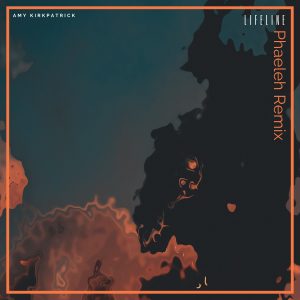
Amy Kirkpatrick is also Platinum Record awarded for her songwriting with Universal Music Group in Europe. She knows her way around songwriting front to back, and a top notch vocalist. With a truly original and elite vocal style, she has taken the world by storm with sample packs, songwriting and releasing as an artist. You can check out her debut solo single Lifeline remixed by Phaeleh HERE
So without further ado, lets get into the interview with the talented Amy Kirkpatrick!
BOS: What are your main roles in Music Business and the Music industry?
AMY: My main roles seem to shift and evolve year to year, which I think keeps longevity in a career in the music business. I’m a producer and songwriter, and recently released my debut single ‘Lifeline’ as well as a Phaeleh Remix on my boutique label Little Shop Records. I create Sample Packs and have recently gotten into field recording and creating meditations and wellness tools for artists within the industry.
BOS: How long have you been involved with the Music Industry?
AMY: I booked and organized my first official live show at fifteen, so twenty years I’ve been in the business. I’ve been a full time professional songwriter and composer in the industry for about ten years now. I’ve been playing classical piano concerts since I was four.
BOS: What are some tips for other women that want to get into the Music Industry?
AMY: Find and create the communities you want to see and be a part of. Reach out to people you’d like to work with, befriend rejection (it’s just information fueling you to move forward), seek collaborations that excite and inspire you, and try new things. I didn’t even know the world of Sample Packs and music production was something that would interest me when I first started and now I find studio work much more grounding and creatively fulfilling for me than touring or live shows. Say a loud and clear no to things you don’t want to do. And say a ‘yes and figure it out later’ to the projects you want to be a part of. That’s what we’re all doing, from newcomers to professionals. We’re figuring it out as we go.
BOS: What are your favorite things about being in a Music scene?
AMY: I really enjoy meeting and connecting with other songwriters and feeling that deep creative connection. Sharing the highs and lows and the ways we get through them. I also really love that I have years of experience and trials and errors behind me to help the next person. Coaching and empowering others with information is really meaningful for me these days.
BOS: What are some of the challenges that you have ran into being the Music Industry?
AMY: Over the years there’s been challenges with having a healthy sustainable income, inequalities for women in the business, not getting jobs or booking certain gigs because I’m a woman, and also various emotional experiences with sexual harassment. The Me Too movement didn’t exist when I was first starting my career and I felt very alone. I’m so grateful there’s now more action taking place, and communities to join when you’re seeking help. I now have tools that help me for each of these challenges, the main one being if something feels off, it is. And to walk away from any job, person, or situation where I don’t feel safe, equal, and valued for my skills and experience.
BOS: What are your favorite styles of music when you are listening? It can be totally different than anything you work with!
AMY: I pretty much only listen to ambient music when I’m at home. I’m a distance runner, so for that I’m a big fan of Lane 8 mixes, Bob Moses, Rufus Du Sol, and something a little more upbeat.
BOS: What is the best memory you have while writing music?
AMY: There’s sort of a lot of little moments. I like to think my songs know how I’m feeling before I do. Sometimes when I’m working through something emotionally, my lyrics will tell it how it is very clear. I love those moments where you can’t hide from your own writing. I also have songs come in one full thought, or channeling stream. I tease that the second I say I’m taking a break from songwriting, songs and lyrics just won’t stop barreling through.
BOS: What are your greatest accomplishments? Either in music or in life in general.
AMY: I gained a Platinum Record for a track I co-wrote with Universal Music Group in 2020. That was pretty cool and definitely felt like an ‘exhale’ moment. That’s something I’ve wanted to accomplish since I started and I feel will get me into more rooms moving forward. In life, I define success as peace and being present. Success to me is having loved ones around that are happy and healthy, having a creative outlet that feels inspiring, making enough money to have a calm less anxious mind, and helping the next person. I love what I do but nothing is at the cost of my mental health and wellness these days. That feels like a massive life accomplishment for me after leaving Hollywood and living at fight or flight stress levels and to truly understand and recognize happiness comes from being in the moment.
BOS: What are your favorite audio plugins or pieces of gear to work with?
AMY: I’ll be honest, if I could live in a world where I never had to touch a computer or use gear to work, I would. For me using my voice is the only tool I crave to use as a singer or having my hands on a grand piano for composing. But during the pandemic I absolutely saw the value in learning and using production tools. It just gives you a freedom of being able to do things yourself and to produce your own work. I use Ableton which I find fairly straightforward to use after a couple years of learning and my favorite piano sound is ‘Mini Grand’. I’m blown away at how close it sounds to an actual baby grand. I use an Akai MPK Mini for sampling and simple piano lines because I travel often between cities or studios and it’s nice and compact. Audio Technica headphones always. I also use a Zoom recorder for field recording ambient nature sounds, either for sampling or for a new project I’m working on. I keep it all pretty simple.
BOS: How do you see the Music Industry changing in the future?
AMY: I already see the world of Sample Packs evolving and being an incredible way for artists to earn an income, as well as it being a new art-form. I’ve also learned through my own experiences that you can have even more success releasing tracks on your own, publishing your own work, and then pitching to places yourself. It just moves faster in a lot of ways. No one is going to work harder for your career than you. I see a lot of artists saying they’re not into major record deals or pub deals anymore. I’m fully independent now, out of all record and publishing deals from my past, and for me it’s felt so much more freeing. And you own 100% of your own work so… something to think about.
BOS: How can other Women help ensure a promising future in Music Business and the Music Industry?
AMY: Keep speaking up for each other and building communities. Any chance you have to help lift someone up or offer a connection that could help them, do it. Learn how to negotiate deals, and don’t be afraid to ask for what you feel you’re worth. Funding your projects, and having a sustainable income will enable you to stay in the music industry. I can’t stress this enough. I’ve been there, not being able to afford groceries and being sick from stress, then somehow being expected to perform well in studio sessions. You can’t pour from an empty cup, and yet artists are repeatedly expected to. Once I put myself and my health first, the dots connected so much faster. My confidence skyrocketed and I was able to create a sustainable path in the industry on my own terms. Take care of your own health and wellbeing first and foremost, and find people you connect with. When we hire each other, pay each other, share information, and release incredible music that’s making waves for all of our futures. I also offer coaching for women in the music business if that could be at all helpful, feel free to reach out and chat.
Thank you hugely to Amy Kirkpatrick! Be sure to check her out on Instagram and Spotify and become a fan!
PRODUCING 40 SAMPLE PACKS – INTERVIEW WITH BASEMENT FREAKS
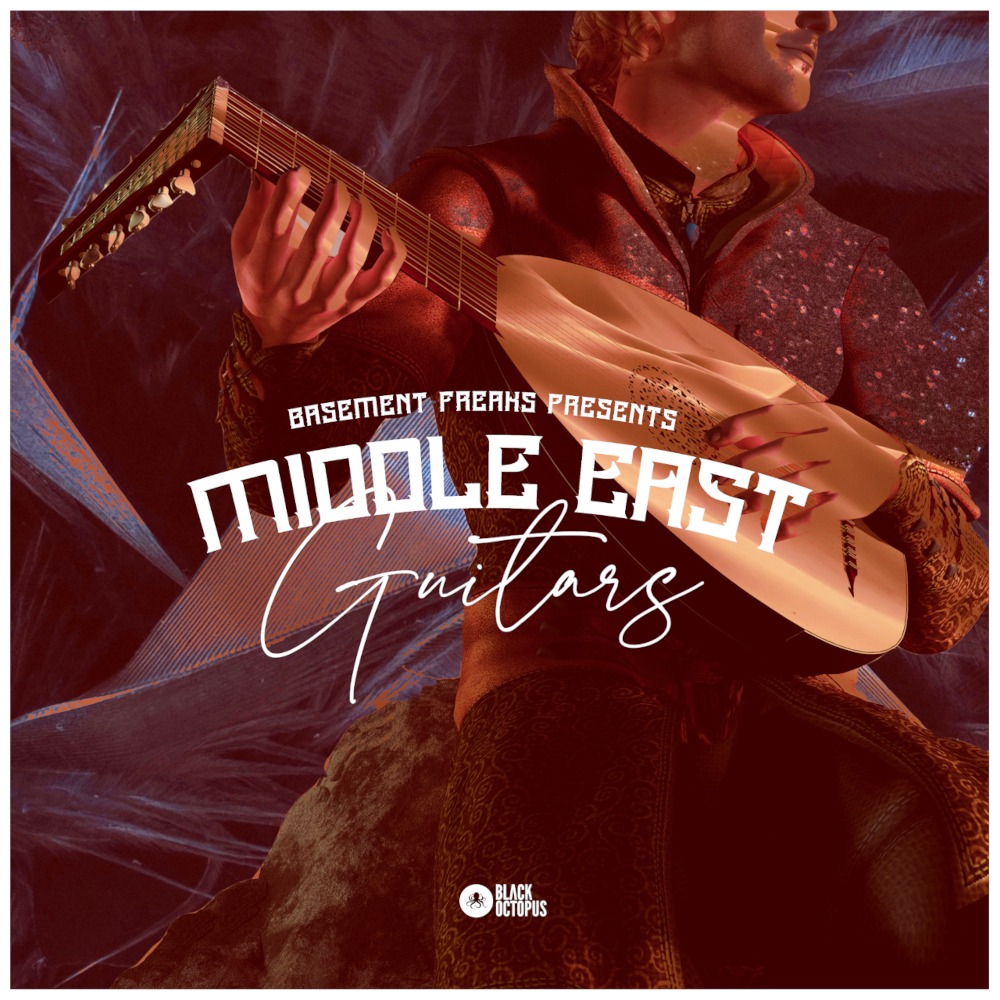 Anybody that has produced a sample pack knows how much hard work and dedication it takes to end up with a completed product. Not only do you have to posses a high level of sound design and musical skills, but there is also a large amount of work that goes on behind the scenes such as editing, organizing, and naming hundreds if not thousands of files. We launched the first Basement Freaks pack in 2014 and what a journey it has been to the very impressive 40th release in the catalog Middle East Guitars. We caught up with Basement Freaks producers Georgios Fotiadas to share some of his wisdom on what it takes to produce 40 sample packs and some insights into his studio tools and process.
1) Congratulations on completing your 40th sample pack, that is definitely no small feat. Can you tell us what kind of determination and dedication it takes to complete 40 sample packs?
Thanks, its been 3 years of 100 % basement freakin, no much social media, no gigs or other type of activities except learning, testing, nerding out and questioning.
2) Do you have any advice for producers who want to start making sample packs?
As general advice I would point out that it is a totally different game than making music, there are very few people with amazing talent that can thrive on both ends. I was able to multi task a lot when I was younger because of my many interests for everything related with music but not so much anymore. My story here is total determination on one major goal. If you want to do this on full effect it will definitely be a crossover point on your producing career. Test it out and if its something for you then dive in. The competition levels are rising every day.
3) What are you some of your favorite tools in the studio?
My UAD Plugins and also my hardware: MPC ONE, Moog Sub Phatty, Analogue Heat, Digitone, Integra 7, Deepmind12, AKAI S-2000 & Emu Proteus 2500, Fender Guitars, SPL & Midas Pre amps, Warm Audio WA76 compressors, TC Electronics M-2000 effects processor, Chandler TDR-101 Tube Driver, AKG & Sennheiser mics, all favorites.
4) Where do you find your inspiration and ideas for some of your sounds?
I’ve been a session musician with the ability to jam hard, and then a music producer and a DJ. I’ve always been interested in every single music genre for over 3 decades. Inspiration comes from past band shows, DJ Shows, traveling, listening to records, listening even more records and lately checking my DJ friends Twitch shows. Of course I don’t forget to check the shops where my releases are placed and also to check and buy other sample packs. I am using Splice to the max, I have made dozens of tracks as an exercise with using only sounds from there.
6) You collaborate with a lot of different artists as well on some of your packs, what is it like collaborating on a sample pack with another artists versus working on your own? Are their advantages & disadvantages here?
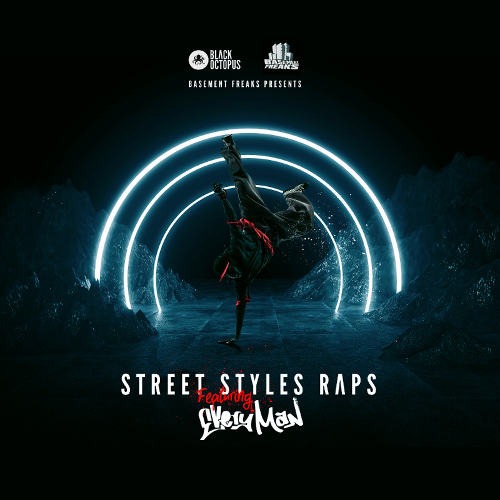 I was looking at expanding my sample pack collection in every possible way. Vocals, Percussions, and a few other things I couldn’t produce on my own. I’ve ended up having the pleasure to work with some amazing people and learn a lot of new things. Everyman from LA came over for few days and we recorded and produced our pack Street Styles Raps and that was a nice project.
7) What is your process like for when you create a sample pack – do you have an idea or theme in mind to begin with or do you experiment with ideas and see how it takes shape?
I have tried, and will keep on trying all possible ways or combinations I can think of. I always have an idea but the same time I am flexible to move to the most suitable direction, I’d rather pick just a select few inspired recordings instead of tons of casual performances so I will jam and I will also delete a lot of what I won’t use. From here I can break down 2 major workflow examples to start with even though I generally think that its very difficult to give any type of advice on this subject to anyone without knowing his or her capabilities. Everything depends on what you know and can do. Everyone can be called to find out your new workflow totally by yourself, that’s what I did and I did it because I find it fascinating and interesting. Here are some examples:
- Recording a pool of loops and one shots from an instrument and then produce pieces of music over top of it is one way. Let the vibe of the recordings to guide you.
- Compose 10 different music patterns of a single genre to try cover most of its basic aspects, make a mix of those kits and export all the individual sounds. You can always add more sounds once you know already what you have.
In both cases you should have an idea to start with and know what you doing or messing with. If you are a beginner it’s possible you’ll have to go through several mistakes that you will have to learn & adjust.
It’s absolutely fine to experiment and try whatever it comes on your mind and also immediately capture that on tape. Since you’ll be dealing with hundreds of sounds you should always have a vision of the possibilities and directions that your experimentation have opened, do whatever you feel but in the end you should present a product that meets the industry standards.
8) You are quite a talented live musician in addition to being a producer – what skills does being a musician help in the sample pack world?
Thanks, being a musician has given me the advantage of recording and producing material for my own packs but also having an idea of how I can create the best conditions to record other musicians and take out as much as possible from the sessions.
I have to admit that DJing was a great school which I find very beneficial for my sample pack production, I was obligated to listen to even more music, collect even more music, and always stay updated on things. As a DJ I’ve learned about what moves the people. I am using all the information and experience I gathered from my past music career for this.
9) Can you tell us a little bit about your Basement Freaks music project? Do you prefer writing music to creating sample packs or do you enjoy them both the same?
I have moved from music production to sample packs production the last 3 years. I really wanted to dive in deep on making sample packs like I did. From this point and onward I might be able to keep all engines on and produce music, more packs, and anything else I enjoy doing. I’ve got into equipment nerding a lot for a while, it’s fun when you are able to test out stuff.
I’ve definitely have leveled things up on my arsenal thanks to Black Octopus Sound who has been exceptional on pushing my content on the right people and definitely played a huge role on this great achievement.
10) What do we have to look forward to in the future from you?
There might be a random day that I will start producing music and claim it as its my own again, the day that I will give up everything and ride with the mothership.
Will slice up Funk, tunes, samples, instrumentals, beats and anything that keeps my interests high.
End of Interview
A huge thanks goes out to Georgios for all his hard work he puts into his packs for us. Check out the Basement Freaks impressive catalog of sample pack HERE.
WOMEN IN MUSIC – SENSU
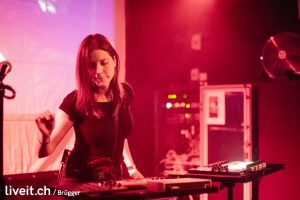
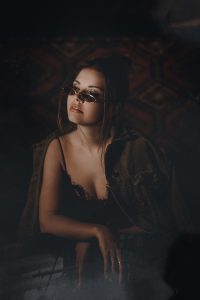
Welcome back to another interview with a super talented and amazing female artist in the music industry! Today we are sitting down with Universal Records / Quartz Records artist and electronic beat making extraordinaire Sensu!
Jasmin Peterhans (born 1992) known by her stage name Sensu, is a music producer, musician and live-act based in Baden, Switzerland. To simply call her a producer and performer of electronic music doesn’t do justice to the dimension of her soundscapes. While her unique signature style borrows bits and pieces from experimental, electronica and Bass Music, a soulful warmth resonates from each of her productions that places them in a category all their own.
As a teenager, Sensu discovered hip hop, the culture held her attention for several years. By 2012, though, the global resurgence of electronic music had influenced her to try her hand at producing more eclectic styles that expanded her creative horizons.
Signing with Universal Music in 2019, Sensu’s debut record called Embrace was released September of the same year and undoubtably strengthened her profile as one of the most auspicious young electronic musicians around. It featured collaborations with internationally emerging artists just as Otis Junior, Bassette and Ryck Jane, as well as young Swiss singer Benjamin Amaru and is an infatuating conglomeration of Bass music and pop-loaded Electronica. In addition, the release and the associated hype earned her a nomination as “Best Talent” at the Swiss Music Awards 2020.
<Sensu has a sound all to her own and has been gathering fans around the globe with various single releases, EPs and an album on a Major Label. She is setting the standard for a lot of upcoming talent! Just check out Sensu’s new single “Confused” HERE to see what I mean.
Ok, so now we know about her, let’s get started!
BOS: What are your main roles in Music Business and the Music industry?
SENSU: I’m a music producer and live artist from Switzerland. I collaborate with vocalists from all over the world to work on tracks for my projects and also produce instrumental tracks for others.
BOS: How long have you been involved with the Music Industry?
SENSU: In 2017 a friend of mine established an independent record label for electronic music called Quartz Records. It all started with my first EP “Lose Sight” which was released the same year. The years before I was working on my producer skills and released some tunes on Soundcloud, but that was all.
BOS: What are some tips for other women that want to get into the Music Industry?
SENSU: I definitely recommend to collaborate with other people who already have experience in the music industry (or not, just know that collaboration is the key). I think it’ll help to gain some self-confidence in what you do. It doesn’t matter if you’re a vocalist or a producer, but sharing thoughts will inspire everyone around you, and you can reach a next step you want to achieve.
BOS: What are your favorite things about being in a Music scene?
SENSU: My favorite thing is to get to know so many people and make connections all over the world. I absolutely love to collaborate with other artists and work on songs together, it broadens my horizon, which fulfills me in a deep way.
BOS: What are some of the challenges that you have ran into being the Music Industry?
SENSU: I think the biggest challenge is to find people who really support your project and vision with all their heart. Someone that “gets it”. Also, it’s very important to find people who will always be 100% honest when it comes to your music. It’s the only way to get better in what you do.
BOS: What are your favorite styles of music when you are listening? It can be totally different than anything you work with!
SENSU: I must say most of the time I listen to rap and electronic music, but there are also times when I love to listen to metal music. It always depends, but most of the time I just listen to my Mood Playlist on Spotify. It includes everything I like at the moment.
BOS: What is the best memory you have while writing music?
SENSU: Diverse moments when I realize I created something really special. I love that indescribable feeling you have when that happens. Also a special moment to me was, when I first heard the idea to “Outspoken” from UK based singer/songwriter LYAM. He showed it to me when I was at Kensaltown Studios in London with him. We met a lot of inspiring people thanks to that project.
BOS: What are your greatest accomplishments, in music or in life?
SENSU: I think one of the greatest accomplishments in music was to be the first (female) music producer in Switzerland to sign a major record deal, be nominated for a Swiss Music Award, and that I had the chance to play shows all around the country.
Also one of the greatest thing (not really an accomplishment though), is to find my own style/genre and still have the chance to learn so much every time I work on new music.
BOS: What are your favorite audio plugins, techniques or pieces of gear to work with?
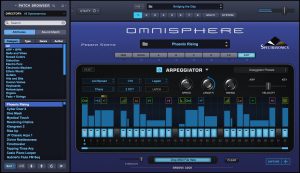
SENSU: I love to create new tunes with my Prophet-6 and my Moog Sub37. It feels good to not always be focused on all these vst plugins and I really enjoy the different workflow. Of course I also use a lot of different plugins. A few of my favorite FX are FabFilter Pro-Q 3, Echoboy, ValhallaVintageVerb, Decapitator, LittleAlterBoy and when it comes to synth/instrument plugins I like to work with Omnisphere, Keyscape, Serum and Synplant.
BOS: How do you see the Music Industry changing in the future?
SENSU: It’s so easy to release music nowadays. I think more and more music will be released in the future, so it’s really important as an artist to tell a story, interact with fans/listeners and most important to find the “WHY”, so people can identify with the artist and the music.
BOS: How can other Women help ensure a promising future in Music Business and the Music Industry?
SENSU: I think if we collaborate and support each other more often, it’ll definitely help to ensure a promising future in music business and also the music industry. I think everything’s possible if you approach life with an open mindset!

Thank you Sensu!!! Catch her on Instagram and keep up with new releases coming soon!
Her latest Single “Confused” featuring Milesikco is out now!
WOMEN IN MUSIC – JESSIQUOI
Welcome to the first interview of a massive series filled with loads of talent! Women in Music will be focused on Female talents in Music. They will be talking about their careers, goals, tips for the new generations, and other nuggets of info and experience. We are excited to bring Jessiquoi for the first installment!
Jessiquoi is becoming a household name in Europe and she is leaking Stateside too with a tour in USA and Canada prior to Covid. She is also a near and dear friend to me working as a Record Producer at our studio, Influx Studios, in Bern Switzerland and Berlin Germany. With that said; I knew she would be the perfect first person to bring in for the Women in Music interview series. She is a huge advocate for young women getting into music in Central Europe and teaching classes at all girl production schools. She has been through the ropes in all areas of the business and stepping into a big role in 2021 as Record Producer for others to utilize her talents and expertise. So first, let’s get to know Jessiquoi!
Jessiquoi is a producer and performer from Australia, now based in Bern, Switzerland. She is experienced in production of many styles of music, such as electronic, rap, experimental and pop music. After exploding onto Switzerland’s underground electronic music scene with audacious, energetic live shows, she quickly progressed to massive festivals such as Gurten Festival and Zürich Openair. After winning Best Electronic and Demo of the year at M4Music Festival in 2018, she has spent the last 2 years expanding to the European arena, and beyond; all the while releasing music that she recorded and produced entirely alone. She approaches music production with a holistic view, keeping in mind all aspects that encompass a music career these days – songwriting, producing, live shows, music videos, marketing and social media. Sports fans can also hear her work on the latest MySports television programs. Jessiquoi is an Ableton Live coach and has been working closely with HelvetiaRockt over several years to give young women the skills they need to produce their own music. She is the newest team member at Influx Studios and works as a producer.
I got to sit down with her and ask her some questions about her work and future industry views. Here we go!

What are your main roles in Music Business and the Music industry?
Foremost I see myself as a composer and a producer. However, I’ve spent the last 5 years performing my music on stage as well. Since I actually come from a background in dance, I feel very comfortable being both the studio hermit and the entertainer on stage. Most recently I started working as a record producer at Influx Studios in Bern, Switzerland.
How long have you been involved with the Music Industry?
For me that first show in October 2015 where my name was actually on the bill at a venue marks the beginning of my industry debut, even though there was a lot of preparation and training that went into getting to that point!

What are some tips for other women that want to get into the Music Industry?
Personally I don’t think the tips for women vary from the tips I’d give men – If you have a vision, pursue it. People are going to criticise you for it anyway. Just smile and give them the middle finger in your mind. That crazy or ‘stupid’ idea you have? Do it. Women are definitely becoming more apt at doing this despite all the pushback!
What are your favorite things about being in a Music scene?
Since I work on my music alone, I love being able to get out and perform. Through sharing backstages and seeing other people play before and after my own set I’ve discovered that there are many interesting projects happening in Switzerland. It’s sad but I think I had a bias against the Swiss music scene in the beginning. Let me tell you, it’s not what you’d think!
Check Out Jessiquoi “The Addict” music video here!
What are some of the challenges that you have ran into being the Music Industry?
I worry that everyone, including myself, is focused on getting that hit song. I worry that everything we produce has to fit into that sellable format. You know the one I mean – chorus/hook within 30 seconds and no longer than 2:45 long. ABABCB. And that not only affects our process, but also the value we assign to different music. Just because you didn’t make a wonder-hit of a track that Spotify graced with multiple playlist placements, that doesn’t mean you’re a failure as a musician. And yet that’s what the culture communicates to us.
What are your favorite styles of music when you are listening? It can be totally different than anything you work with!
I don’t enjoy listening to music that’s too similar to what I do. I like listening to either K-Pop or Taiwanese pop. I find that the song structures are often very different to western Pop, where you’ll generally have a 4 chord structure going through the whole song and the melody and drum/bass arrangement will vary in intensity, but the chords remain the same. In K-Pop the pre-chorus might have bouncy, completely different chords to the verse and almost sound like a new song. Then it may transition into a chorus which has diminished 5ths all over the place and sounds rather dark. There’s always a surprise waiting that keeps my attention on the song. In my opinion it sounds as if it was written to be actively listened to. I like that in a pop song. I’ve also become interested in listening to other Swiss underground artists.

What is the best memory you have while writing music?
Every time I’m working on a song there is this moment where all the main elements come together and the thing just grooves. It happens on every song that I end up releasing. There’s this point where it’s not even finished yet but I simply can’t stop myself from getting up and dancing and singing through the studio. I’ll spend about an hour doing that with the demo on repeat. That’s the moment when I feel so happy, because everything in my tiny universe goes into perfect harmony. And it’s this self-generated happiness (especially for someone who struggles with exactly that) that makes me so thankful that I’m able to make music.
What are your greatest accomplishments? Either in music or in life in general.
This question is hard for me because I definitely struggle with destination fever. If I landed a hit song tomorrow maybe I’d feel good for a day but then I’d start worrying about what I could do even better. I guess my greatest achievement is that I actually took the plunge and trusted enough in my own talent and vision to do what I love.
What are your favorite audio plugins or pieces of gear to work with?
Right now I’m kind of obsessed with Output’s Analogue Brass and Winds. I love that epic brass sound especially in movie or game music. I always wanted to incorporate that into my style. Of course there are loads of presets but I find that there is so much room for customisation of the sounds since they give you access to all the parameters to completely redesign the sounds yourself. Anyone listening to my new music will also hear Soundtoys’ Little Alterboy at work!
How do you see the Music Industry changing in the future?
I’m not too savvy about the business side of things. I know that I would like streaming to be made fair for creators. I know that I would like the distribution of wealth to actually reflect the value of what the creatives – the originators – do, instead of downgrading us to a level of dependance on middle men and gatekeepers. Without the creatives, there is no music industry. But I feel uncertain whether that will change quickly. The power imbalance has been around since long before streaming. What I do predict is that multi-media experiences such as games and virtual reality will become widespread and music will be a huge part of that. Some of the best games in history had memorable soundtracks as well, after all. So I think that collaboration across different media and the visual presentation of music will continue to gain importance.

How can other Women help ensure a promising future in Music Business and the Music Industry?
I feel that women approach music and the stories they tell in their music differently to men. That’s because we still experience life differently in our societies. Women have a unique perspective to bring to our global musical landscape that cannot be imagined by someone else. As more of us emerge as composers, producers and storytellers, the more the scene will innovate. I think we are only at the beginning of seeing what women can and will do.
So there you have it! A step into the mind of Jessiquoi and her work! If you want to check her out, be sure to drop her a like on Facebook and follow in Instagram! She also has a website here that shows her latest Music Videos and singles and releases!
NATIVE INSTRUMENTS ANNOUNCES THE MASCHINE+ STANDALONE PRODUCTION INSTRUMENT
MASCHINE+ is a sampler, a drum machine, a synth, and an on-stage superpower. In short, it’s whatever you make it. Leave the laptop behind, jam with your other gear, and create beats in minutes with a wealth of on-board sounds, instruments, and effects.
It’s the iconic MASCHINE workflow, with fewer strings attached.
Do it Standalone
Standalone means more focus, more freedom, and more music making. Plug in, power up, and get creating straight away in the embedded MASCHINE+ production environment – from first ideas to finished tracks. Dial in effects to tweak your sounds, or sample audio and make it your own with an intuitive interface designed to keep the creative juices flowing. And if you want to bring your ideas into a DAW, copy them over, and boot up the MASCHINE software on your computer to pick up where you left off.
9 Instruments, 35 Effects, and Thousands of Sounds on Board
As well as its classic groovebox workflow, MASCHINE+ includes MASCHINE+ Selection: A dedicated package of nine synths and sampled instruments, 35 effects, and seven Expansions (including two of your own choosing) that work seamlessly in standalone mode. It includes heavy-hitters like MASSIVE, FM8, MONARK, PRISM, the MASCHINE Factory Selection, RAUM, and PHASIS. That means its 16 pads can sound like a dusty vintage drumkit, a warped wavetable lead, or an organic modal synth – pretty much anything you can think of if you flex your sound design skills.
Sample and Sequence Everything
Whether you’re digging records or ripping radio edits, record any sound into MASCHINE+ and quickly chop and stretch the results into your own custom kits. Or transform and twist them in real-time with the Audio plug-in. The same goes for guitars, vocals, drums, and anything else – more sounds means more creative ways to make music.
Made to be Played
Bring real expression to live performances with intuitive control over your music – tap out beats, run arpeggiators, or tweak synth melodies in real time. MASCHINE+ is an intuitive live sequencer, a fully-fledged groovebox, and a powerful performance synthesizer rolled into one.
Introducing Clips
Clips let you arrange your ideas with even more freedom. Create transitions across scenes, add unique variation to patterns, record MIDI directly into the full arrangement, and freely add audio wherever you need it. Once you’ve fleshed out your ideas, you can use MASCHINE+ as a powerful tool to push tracks past the finish line.
Connect and Control Your Setup
Play and sequence outboard gear and capture the results, or manipulate external audio in real time with effects. MASCHINE+ can control, mix, and manipulate the rest of your setup with MIDI, line, and mic inputs to bring everything together instantly. And if you want to work with a computer, it doubles up as a classic MASCHINE controller too.
Sync and Add Sounds Wirelessly
MASCHINE+ is Wi-Fi enabled, which means you can install new sounds, instruments, and effects at the touch of a button, without a computer in sight. When it comes to jamming with others or playing out live, keep in sync with other music apps, DAWs, and compatible gear with Ableton Link.
Features
• Immersive standalone workflow for creating beats and melodies, sampling, arranging music, and performing on stage or in the studio
• Includes MASCHINE+ Selection with industry-leading instruments, sounds, and effects, plus renowned MASCHINE drum and bass synth plugins and effects
• Quad-core CPU and 4 GB RAM for fast, seamless creation when it counts
• Pro-grade, 44 kHz / 24-bit audio interface with 2 x 1/4″ TRS line outputs, 2 x 1/4″ TRS line inputs, 1/4″ dynamic mic input, stereo headphone output, 1 x MIDI In, 1 x MIDI out; 1 x Footswitch, 2 x USB ports for MIDI controllers / external HDDs
• Robust, anodized aluminium design for years on the road and in the studio
• Iconic MASCHINE features and workflow including 16 velocity-sensitive pads, MASCHINE effects and plugins, swing, pad link, note repeat, step sequencer, and vintage sampler emulation
• Use standalone or with a computer – integrate with your studio workflow, and unplug for DAW-less setups or live performances
• WiFi and Link enabled for wirelessly installing and updating products, collaborating with others, and syncing with other gear
System Requirements
Standalone Mode
You can use MASCHINE+ without a computer, but you’ll need a wireless internet connection and your Native ID to get set up.
Controller Mode
• macOS 10.14 or 10.15 (latest update), Intel Core i5, 4 GB RAM
• Windows 10 (latest Service Pack, 64-bit only), Intel Core i5 or equivalent CPU, 4 GB RAM
Additional Requirements
USB 2.0 Port, 9 GB free disk space for MASCHINE software and MASCHINE Library, 24 GB free disk space for MASCHINE+ Selection.
Supported Interfaces: Stand-alone, VST2 (64-bit), Audio Units (64-bit), AAX 64, ASIO, CoreAudio, and WASAPI. Please note: Native 64-bit support for stand-alone and plug-in versions.
MASCHINE requires activation: Activate using the serial number on the bottom of the unit. In case of graphics issues, please install the latest drivers for your GPU. This can be necessary even if Windows reports them as up to date.
MASCHINE software, MASCHINE Factory Library, instruments, effects, and sound content are provided as downloads after hardware registration – an internet connection and a graphics card which supports OpenGL 2.1 or higher are required for initial download and activation of MASCHINE software.
WALDORF ANNOUNCES THE IRIDIUM DESKTOP SYNTHESIZER BASED ON THE QUANTUM ENGINE
Waldorf Iridium has made the impossible possible. The mighty synth engine from Quantum is now available in a compact form. Tracing the footsteps of its bigger brother, Iridium features all the synthesis elements of Quantum as well in a rack-compatible format. The combination of the powerful engine, incredible flexibility and detailed sound shaping facilities creates sheer endless possibilities of sound. Yet, the comprehensive layout and easy-to-understand structure lets you design your own sounds in no time. Sporting a solid metal casing and the same high level of craftsmanship like Quantum, Iridium is now ready to take over studios and stages throughout the world.
Contributing another entry in Waldorf’s rich history, Iridium joins the family as a direct descendant of the PPG Wave. Though, Iridium offers much more than its ancestor. Five different synthesis models are provided by Iridium for each of the three oscillators:
- Wavetable
- Waveform (Virtual Analog)
- Particle (Sampling and Granular Sampling)
- Resonator
- Kernels
Kernel mode has been introduced with the OS 2.0 of Quantum. This huge upgrade allows one oscillator to be turned into up to six sub oscillators. These can be interlinked through FM at audio rate and arranged in user-definable constellations. Just this upgrade alone would have provided enough additional features to create a synthesizer on its own. Now, all those functions have been integrated into Iridium as well.
Up to 7000 patches can be saved in Iridium. Patches from Quantum can be loaded in Iridium and vice-versa.
Iridium features three digital filters per voice. Two in the Dual Filter section and another one in the Digital Former. Several types are available to choose from:
- 12 or 24dB and Lowpass/Highpass/Bandpass with optional saturation or dirtiness.
- Various filter models are available including those from Waldorf Nave, Largo and PPG 3V.
- The Dual Filter section can be controlled independently or together in several different link modes.
- The Digital Former offers all the filter types and models from the Dual Filter plus unusual models like Comb, Drive, Bitcrusher and more in addition.
All filters retain a true stereo signal throughout the entire structure of the instrument.
Up and down, back and forth
6 Envelopes, 6 LFOs and many more are just waiting for being used as sources in the 40 slots of the Modulation Matrix. Each slot has one additional control amount. Modulations can be directed to almost every numerical value in Iridium. All sources and destinations can be used as many times as desired until the Modulation Matrix is full. If you ever happen to run out of LFOs or Envelopes, you can use the Komplex Modulator for generating a custom shape LFO or Envelope.
Complex, but not complicated
Even though Iridium features a staggering amount of parameters to control, everything is organized in a logic structure which is easy to master. The major controls have their own dedicated knob, while the rest is accessible through the touch screen and the encoders around. There are no long menus keeping you from doing what you had planned. Instead, you will find a workflow which you will soon miss on other synthesizers.
Hands-on
Embedded in the front panel, a 4×4 silicon pad matrix invites you to launch notes, chords, arpeggios and sequences with up to 32 steps for notes and multiple parameter lines. Direct access to the parameters is granted by the seven encoders to the left and the right hand side of the touch screen.
Take a look inside!
Iridiums large color touch screen keeps you informed at all times. Upon moving a knob, Iridium gives you an optical feedback of your changes in real-time. Filter curves move, Particle grain sizes change, Envelopes warp and much more:
- Komplex Modulator curves can be drawn with your finger
- Envelopes show at which point the voices currently are
- Wavetables are displayed in comprehensive view modes
- VU meters show which voices are used and the individual voice levels
- Different Analyzers show the audio signal at different points
Get connected
Two Audio Outputs allow you to listen to Iridium, while two Inputs allow Iridium to process external signals. 4 CV inputs plus Gate In and Trigger In are ready to forward external signals to the Mod Matrix. Furthermore, Clock In and Clock Out will get your gear in sync. MIDI connections can be made through USB and DIN MIDI. Iridium is also equipped with a USB Host port for MIDI devices. This port also handles data exchange, in addition to the MicroSD card slot.
Once again, Waldorf have underlined their status with a new and exciting synthesizer.
Iridium is designed, constructed and made in Germany. All components used are industrial grade quality to create a reliable studio device that is made to last for many years.
Iridium has been released and is now available from a dealer near you. Please inquire at our distributor for your country.
GOING DEEP WITH CUTTING RECORDS – INTERVIEW WITH ADI FLÜCK
TODAY WE ARE TAKING A DIVE INTO AN AREA OF AUDIO NOT AS OFTEN TALKED ABOUT. A PLACE THAT GOES BEYOND MASTERING… AND BEYOND THE DIGITAL REALM. AS RETRO AS IT IS CURRENT, VINYL IS OFTEN AN AUDIOPHILE AND MUSIC COLLECTOR’S FAVORITE MEDIUM TO LISTEN TO THEIR FAVORITE SONGS. THIS IS WHY I DECIDED TO BRING A SET OF QUESTIONS TO SOMEONE WHO KNOWS IT BEST; WE WELCOME THE CUTTING ENGINEER ADI FLÜCK TO THE GOING DEEP INTERVIEW SERIES! A ROLE LESS TALKED ABOUT THAN ITS CLOSEST SIBLING THE MASTERING ENGINEER. NOT ONLY DOES HE DO MASTERING, BUT HE ALSO CUTS LACQUER, WHICH BECOMES THE VINYL RECORDS YOU MAY HAVE AT HOME!
Before we get into the interview, here is a little history about Vinyl Records. The phonograph disc record was the primary medium used for music reproduction throughout the 20th century. It had co-existed with the phonograph cylinder from the late 1880s and had effectively superseded it by around 1912. Records retained the largest market share even when new formats such as the compact cassette were mass-marketed. By the 1980s, digital media, in the form of the compact disc, had gained a larger market share, and the record left the mainstream in 1991.[1] Since the 1990s, records continue to be manufactured and sold on a smaller scale, and during the 1990s and early 2000s were especially used by disc jockeys (DJs) and released by artists in mostly dance music genres, and listened to by a growing niche market of audiophiles. The phonograph record has made a niche resurgence as a format for rock music in the early 21st century – 9.2 million records were sold in the US in 2014, a 260% increase since 2009.[2] Likewise, sales in the UK increased five-fold from 2009 to 2014.
As for Adi, he is the main mastering and cutting engineer at Centraldubs Studios in Bern, Switzerland. Adi has been mastering and cutting records for the last fifteen years. He started his career in live music business as FOH (front of house) mixing engineer. He then toured for years internationally and was recording bands, but then he finally decided to focus completely on mastering and cutting. Some of his clients and credits are Swiss electro Godfathers YELLO and Boris Blank, electronic Techno label !K7 (Tricky, DJ Kicks series, DJ Tennis ect.), Moriarty, Altin Gün among many others.
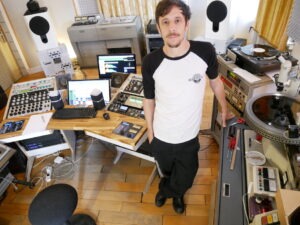
SO, WITHOUT FURTHER ADO, ADI FLÜCK IS HERE TO TALK ALL THINGS VINYL!
BOS: CAN YOU TELL THE READERS A LITTLE MORE IN DEPTH ABOUT WHAT YOUR JOB IS AS A CUTTING ENGINEER?
ADI: My job is it to create or “cut“ aka, the master record or master lacquer that will be used in the pressing plant to make more copies. You could call it the “mother record” or “mother disc”. On the technical side we have to take care that the record is playable, per example the needle doesn’t jump, not too much distortion, ect. On the musical side we have to make it sound as good as possible or as close to the clients wishes as possible.
BOS: I ALWAYS FOUND IT EXTREMELY INTERESTING HOW YOUR STUDIO LOOKS LIKE A LAB. LITERALLY WITH MICROSCOPES AND GAS TANKS AND EVEN LAZERS! CAN YOU EXPLAIN WHAT SOME OF THESE MORE ‘SCIENTIFIC ELEMENT’S’ DO FOR THE CUT?
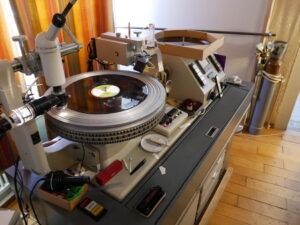
ADI: Just like working with analog tape, cutting records needs specific calibration procedures. If you really want to be on top of the game with all specs, you need to check your system from time to time. You need a very matrix like audio system that allows you to check and measure every point in the system, from start to end. An example is the audio coming out of your computer (DAC – Digital Analog Conversion), what is coming out of the cutting amplifier, and what is coming back from the playback system (pick up), just to name a few. Because of this, you need quite a lot of equipment. The result: it looks a lot like a lab, because we also use a lot of the same things! The microscope is used to inspect the cut groove. The helium (tank) is used to cool the cutterhead so that the drive coils (the two coils the make the cutting stylus move) have an even as possible temperature, and the laser is actually a normal light beam. With this so-called Buchmann-Meyer Light, you can target a light source in a certain angle towards the disc and the reflecting light forms a pattern. With this pattern, you can visually determine the level that the groove has been cut. It’s kind of an old school, science-fiction dB meter. Super cool tool none-the-less.
BOS: WHAT MAKES VINYL ‘ANALOG’ VS SOMETHING SUCH AS A CD BEING ‘DIGITAL’? WHAT’S THE DIFFERENCE AND WHY DO THEY SOUND DIFFERENT?
ADI: Well, Vinyl is played back with an analog system. The Music is stored in mechanical grooves instead of digital, like CD. With Vinyl there is more distortion that’s pleasing to the human ear (up to some extent). Also, all the bad specs of Vinyl are more close to the real world hearing than digital is. Signal to noise ratio of around 40 dBs and Left Right channel separation of 30dBs is ways closer to your ‘human hearing’ than the same specs for digital/CD. All-in-all, the sound of vinyl is more touching and organic, as long as it is well done.
But, alas, it could also feel different because it’s fun to look at the disc turning while its playing!
BOS: ALONG WITH THIS SAME TOPIC; VINYL RECORDS ARE SAID TO SOUND ‘WARMER’, CAN YOU EXPLAIN WHY THIS IS? DO THEY REALLY “SOUND BETTER”? OR DO THEY JUST SOUND “DIFFERENT”?
ADI: Hmm, it definitely sounds different. The question is what is better? Is it that you measure can it with linearity and noise level, or is it that you listen and go like “wow, I just like this better.” I think at the end of the day, a person has to understand that humanity often tries to go after specs and details; but bottom line is you want to listen to music that makes you feel good, and you might even want to dance to. No matter the medium. But to leave the philosophical part and get back to your question about it sounding ‘different’; yes, 9 out of 10 times you will like the vinyl version better than the digital version, mainly because of the ‘organic and natural to the human ear’ result.
BOS: WHAT IS A SUPER SIMPLIFIED STEP-BY-STEP PROCESS THAT MUSIC GOES THROUGH TO GET TO A VINYL RECORD YOU SEE AT THE SHOP?
ADI: First you etch or „cut „ this continues groove into a Lauer or copper (DMM – Direct Metal Mastering) disc. This Master records then gets sprayed with silver dust to give it an electrically conducting surface. Then from here, it gets galvanized, which means that through electroplating nickel, it gets plated to the silver surface. After there is enough nickel plated to the disc, you can remove the metal negative or stamper from the Masterdisc, and you can use that metal piece for pressing. Lastly, a warm vinyl puck is set between the stamper for A and B side and the pressing machine does the rest. That’s the short version. It also helps to understand if you watch one of many videos on youtube. Such as this one: Watch How They Make Vinyl Records Here
BOS: AS MANY KNOW, THERE IS A BIG VINYL BOOM THAT’S BEEN GOING ON FOR A FEW YEARS NOW. WHY DO YOU THINK THIS IS?
ADI: In my opinion there are many reasons. One is an economical one, since CDs are gone (or at least, not as relevant as they once were), bands need a something to sell at their shows or online that the fan can physically have. Of course, there is also the aspect of a real record, everybody can release something digital nowadays, but a record has something serious to it. Another thing to consider is that many famous musicians and groups pushed the hype, everybody thought its cool to do it again after this. And last, but not least, is the sound and the physical music aspect. There are still millions of books sold every year, right? So, the nice things in life we might just want to touch and feel. It’s kind of like our loved ones…
BOS: WHAT’S THE IMPORTANCE OF USING A CUTTING ENGINEER BEFORE SENDING DIRECTLY TO A PLANT?
ADI: Well, a cutting engineer is very experienced and has a great studio environment and knows about styles, genres and cares about your production when it comes to vinyl. He wants your record to sound awesome, and not just an ok or easiest fool-proof way to duplicate the record. We do have great tools to correct issues before it ever gets to the plant. The cutting engineer is easily the most important part of the process if you want the best quality. You can also discuss your release beforehand and he will call you if something isn’t right. If the plant is cutting your master you never really know who is cutting it where with what equipment. So, you have much less control over your production and quality. I guess it’s a bit the same as if you would send your mixes to someone random to master it at a CD manufacturing plant, then they press CDs from that, I mean good luck with that approach! That could end up scary.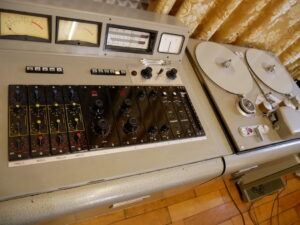
BOS: WHAT IS THE DIFFERENCE BETWEEN A DMM CUT (DIRECT METAL MASTERING) AND A LACQUER CUT?
ADI: The difference lies the material of the blank disc (Lacquer versus Copper surface) the master disc is being made from. DMM has been developed in the 80s, you have less surface noise, so it’s good for very dynamic material like classical music. Also, its more linear and has less pre echo (hearing the music before the tune begins). That also is good for Classical music and maybe music that needs to be super clean. In my opinion DMM can sound good with the right music and the right system calibrations.
But for the most music, like rock, hip-hop, electronic, Jazz, acoustic, world, country ect. a well-done lacquer master is superior (to my ears). Especially for loud and bassy maxis and 7“. With these you get more of that extra magic mojo, a bit like from tape; it just adds something that is irresistible. If you are living in North America, you don’t have to worry about DMM. the only two machines (out of 22 total made) are based at the Scientology headquarters I believe, somewhere in California. So, as long as you are not best friends with Tom Cruise, you will not get your dirty beats or fuzzed guitars cut on to copper, hah! But, here in Europe, most of the plants own a DDM machine, so here it’s more likely to get it cut to DMM.
BOS: WHEN YOU ARE CUTTING A RECORD, WHAT ARE YOU LOOKING FOR IN THE MIX DOWN OR MASTER TO BE SURE IT’S A GREAT CUT?
ADI: It has to sound good. No seriously, it’s that simple. But to achieve this, leave the brick wall limiter a bit away. make music compact with compression in the right way, tape saturation and such, it all works. Don’t use the Brickwall to gain a lot of loudness and ‘slam it’.
Be careful with a lot of distortion of course, such as using clipping and exciters. Since vinyl also adds distortion, this can sound dirty very quick. There is not much a cutter can do about if it’s too dirty at that point. Best practice is to master with a professional engineer, and tell him/her about your vinyl release and then make sure to send your master to a Cutting engineer that is nearby and that you can trust. Send him the 24 bit version of the masters, it will maybe have one limiter and another backed off about 1-2 dBs, so he can choose what works best for the cut.
BOS: IN TODAY’S WORLD OF ‘LOUD MASTERING’, WHAT IS YOUR TAKE ON LOUDNESS WHEN IT COMES TO VINYL? AND WHAT ABOUT DIGITAL SINCE YOU ARE ALSO A MASTERING ENGINEER?
ADI: It really depends on the music and style and the production. I would go with around 8dBs RMS, but it really depends on the style and instrumentation of the music. Less than 6dBs rms/lufs for vinyl will almost always not sound very good. Too much dynamics on the other hand can also be problematic for the cut, especially if you have long-length sides to cut. The more length of music to a vinyl’s side, the less loud a cut can be – the louder the cut, the more space you need. But something really important I have learned over the years is to give the music a good vibe and make it as approachable as possible. Try to make people move with your music, and the record will too. No volume or loudness will make you famous.
BOS: DO YOU LOOK FOR DIFFERENCES IN GENRE FOR THE CUT, OR IS IT MORE-SO JUST TO DO WITH THE SONG’S FREQUENCIES AND OVERALL MASTER FOR THE CUT? WHAT I MEAN IS; DO YOU CUT JAZZ DIFFERENTLY THAN LET’S SAY, A ROCK SONG?
ADI: It also really depends here. Every caring cutter is doing a test cut to see how it sounds played back with a pick up system. When he does this, he is looking for the genre feel, and overall loudness of the record. It’s more about how loud can you cut the disc without too much distortion and keep it sounding musical for that style.
BOS: LET’S TALK ABOUT MATERIAL. THIS IS SOMETHING THAT IS RARELY HEARD OF THESE DAYS IN AUDIO. ACTUAL, PHYSICAL, HAND HELD MATERIAL, WHICH IS USED TO MAKE THE LACQUERS. AS MANY KNOW, ONE OF THE BIGGEST LACQUER (MATERIAL) FACTORIES (APOLLO MASTERS) IN THE WORLD JUST WENT UP IN FLAMES, WHICH IS SO VERY SAD. HOW HAS THIS AFFECTED THE VINYL/CUTTING INDUSTRY? HAVE YOU NOTICED ANY DIFFERENCE YET IN EUROPE?
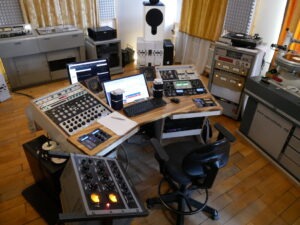 ADI: Europe seems to be alright in this regard, so far, since almost all of mainland cutters were using the Japanese blanks MDC. The supply chain from japan seems to be working for now. But there is another player called Corona (Covid19) that is playing it’s game on the industry.
It’s all stable, but like it is right now for many of us, nobody knows what happens next and what it will be like in 2 months. It seems like the North American industry will be much more affected by the loss of Apollo master discs, and Corona. But, it’s hard to get an accurate grasp at this point.
I hope that there is a new brand of discs on the market by the end of the year, and the supplies for everyone will be covered again. You can learn about the Apollo Masters fire, Read About The Apollo Masters Fire Here.
BOS: MANY PEOPLE HAVE HEARD OF DUB PLATES. WHAT IS THE DIFFERENT WITH A DUB PLATE VS A RECORD THEY CAN BUY AT THE STORE?
ADI: A Dubplate is actually a master quality cut. We use the same acetate discs as used for the masters. But, instead of sending it to the pressing plant, the customer uses the disc to be played at the club, at home or wherever. It’s just one piece instead of main copies. Usually Djs use it to play their unreleased tunes, for instance. Or you can have your album cut as a reference master with the same sound before cutting the actual masters. So, if you want to know how your music sounds on Vinyl, there is always this option of getting a Reference master disc (or dub plate) before you cut and press the real one.
BOS: WHERE DO YOU SEE THE VINYL INDUSTRY GOING IN THE FUTURE?
ADI: No clue, at all. This can go anywhere. But somehow I have a feeling that vinyl will stay as a niche product for quite some time. Maybe for another 10, 20 years easily, and then after that you will probably be able to print your favorite bands LP at home with a 3D printer or personal ‘lathe’.
But who knows, maybe Cassette tapes will take over the world and streaming will slowly disappear, we can only guess with the way the industry turns.
There you have it! Huge thanks to Adi for this awesome insight! I hope some of you reading this have learned more about the vinyl industry and music industry as a whole. There are so many hidden jobs that go into music being released, and cutting engineering is just one of them. Keep checking back for future “Going Deep” articles to discover some of the other less-known arts in the music business! You can read more about Adi here and contact him about any Vinyl related questions: https://www.centraldubs.com/
GOING DEEP WITH MASTERING – INTERVIEW WITH KLAUS HILL
Today we are diving into the world of mastering music with a professional that has earned his stripes (and then some) when it comes to knowledge and execution. Klaus Hill is known as one of the worlds loudest Mastering Engineers, and yet, he does so with such crisp transients and punchy masters, you’d never think it was possible to get them that loud and still sound so good! I wanted to ask him some questions that I feel may be burning inside many up-n-coming producers, let alone, other professionals in the industry. But first, a little more about him.

The year is 1992 and London’s pirate radio airwaves and clubs are awash with a new sound, what people will later call Jungle. It was in this environment that a younger Klaus decided that electronic dance music would be his life. As a producer he’s released music on some of the world’s biggest labels. As a DJ he’s toured the world, was resident at legendary club The End for Ram Records and played some of the biggest and best festivals. As a mix and mastering engineer, he has made his name working with labels and clients such as Ministry Of Sound, Spinnin’ Records, Shogun Audio, Pnau, Heldeep, SCNDL, Peking Duk, Jacks Beats, Chris Lorenzo, DJ Zinc, Will Sparks, Felix Da Housecat, One Love, Sony, Soul:r, Yolanda Be Cool, Sweat It Out!, Kilter, PACES and Ryan Riback.
As you can see, Klaus has been around. He knows electronic music in-and-out. Let alone, he has mastered many #1 chart topping hits and Billboard hits. So, let’s dive in on the world of mastering through Klaus’ eyes (and ears).
BOS : People have always referred to Mastering as a ‘dark art’ as if it is some sort of sorcery. This veil has been lifted in recent years more and more, thanks to online tutorials, plugins, and overall acknowledgement of what goes on behind the scenes with mastering. Do you think there is still anything secretive or hidden about the way engineers do mastering? Is it the ear or gear or both?
Klaus: I think it’s been known as a dark art because it wasn’t an easily accessible process, as you already said, that’s changed. Don’t think there is much left that’s hidden or secret, for me it all comes down to experience and monitoring environment. That’s what I think is key…It’s (and always has been) about having a quality, trustworthy playback chain and knowing and understanding what’s playing back at you. I hear things my clients don’t hear every single day. But there are several reasons for that – and not one of those is black magic!
BOS: We all know Mastering has changed course so many times over the year on what is expected with Mastering a song and the results. What does Mastering mean to you?
Klaus: I’ve always seen myself as the final set of ears and quality control. Picking up on those little things the producer or mix engineer may have missed. And if i can make a mix sound better and perform better on the various playback mediums during the process, that’s even better. It’s knowing when to leave something alone that is key I think.
BOS: We all know the term “loudness wars” which is still a very real thing in the way of certain genres. You are known as one of the loudest Mastering Engineers in the game, that still retain punchy clean transients and sound. Where does this loudness come from? The mix? Certain mastering techniques? Or a combination of both?
Klaus: Loudness potential starts with the mix, it always has and always will. There are tricks I do that help me achieve my “sound”, but at the end of the day, i’m still limited by the mix I’m working with. I do give a lot of feedback to my clients if I know loudness is very important to them, to help improve the mix with that in mind. I am also working a lot with stems, as it cuts out a lot of back and forth and allows me greater access to the parts I need to work on. As for techniques I use to get the level – driving the analog chain and clipping the AD is key to my sound. I could do everything else ITB [in the box, which means only with plugins], processing wise if I needed to. But, I would still find myself coming out to clip the AD and get some analog drive. I’ve got a couple of different AD’s that I use that both give me a different “sound”. Software clippers are nice, things like Standard Clip, but they are sterile when it comes to sound.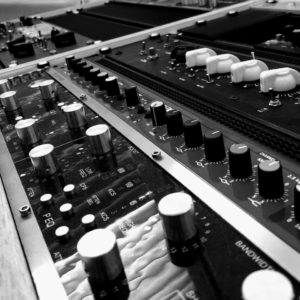
BOS: Are there any mix down techniques that can help a new producer that is mixing their own work (and most likely mastering their own), to get them to be loud and clean?
Klaus: Sound choice is everything and I feel people don’t think about it enough anymore. They overthink mixing, get carried away in the techie stuff they see on YouTube and forget about good old-fashioned sound choice. Getting the basics right, first of all, would make a difference to so many producers. Trying to fix something by excessive EQ, layer loads of other stuff on top instead of finding a better sound to start with is something I hear all the time. You can’t EQ what’s not there.
BOS: Let’s step off the loudness train now for a bit… What about tone and character; what are your go-to plugins that give ‘vibe’ to your mastering chain? I know you use a lot of hardware too, but for our readers that may use mostly plugins, are there any certain ones that give you the character?
Klaus: Plugins have come such a long way, and if I’m honest I’m probably not that far off from going 100% in the box for processing then come out and still clip the AD. Big fan of Acustica Audio stuff for the vibe, it’s pretty dam close to the hardware it’s made from. There are some differences, but I think the positives of quick recall and workflow will eventually outweigh all that. Big fan of Magenta (Manley), Scarlet( Sontec), Ivory (Maselec), White (Custom Solid Stare Pultec) and Jade (Maag and Crane Song). Other stuff I like is DDMF’s Magic Death Eye Vari Mu, lots of the Plugin Alliance stuff (HG Blackbox and SPL especially), the new Vertigo plugins he has done himself (the Vertigo compressor is really bloody good and in recent blind tests people were picking it over the hardware).
BOS: Do you master different genres differently? Or do you use similar chains? What about heavy 808 music such as Trap.. is there something different you apply to handle the subs better?
Klaus: I don’t have different chains for different styles, I use the same gear for every track. I just work out what each track’s needs and use the tools that will get the desired results I’m after. A lot of the time I’m just running through pieces as well, for a bit of “boxtone” or gain, everything else flat.
BOS: Let’s talk for a bit about headphones and their importance, especially for those in untreated rooms. I know you and I both love Audeze, are there any others you’d recommend in a lower price bracket for up-n-coming producers? How important are these for people with not-ideal rooms?
Klaus: Headphone technology has come so far, it is now 100% possible to deliver a mix that translates on all systems using a good pair of headphones. In fact, I think for most bedroom producers working in untreated rooms good headphones are a better choice than monitors. Working on a pair of Audeze is like sitting in a fully treated room with a pair of ATC’s or PMC’s, the detail is that good. I think at the lower end it becomes harder to get something that is going to work, but if you’re going to spend 400 Euro on a pair of Yamaha I’d go put that into a pair of Audze LCD 1 instead. Other headphones to look at would HiFiMan 400i, Sennheiser HD 600/650 also look in Sonarworks correction software for them.
BOS: Do you think it’s possible for Masters done entirely in-the-box to become hit songs?
Klaus: It’s already being done every day! More engineers are ITB then ever, people just don’t talk about it. I’ve had a fair few big records that were done ITB, even a couple of #1’s. The famous Gateway Studios (Bob Ludwig and Adam Ayan) are mostly ITB these days. As I said earlier it’s the listening environment that is important. I’ll see myself 100% ITB in the future for sure. Like mix engineers, it just starts to make sense from a productivity/workflow stance.
BOS: What is the importance of analog in the Mastering domain for loudness? Is it more about ‘sound’, workflow, or both?
Klaus: For me, I think it’s the sound. Driving into pieces of analog to get that level just has a special vibe, the harmonics are sexy as f**k. I find you can go just a little bit harder and louder with analog, the sound stage stays intact better.
BOS: Where do you see the future of mastering? More digitally recallable analog systems? More hybrid set ups? More in-the-box overall?
Klaus: Everyone wants ease of life, so I think digitally recall ability is the way forward. That new McDSP Analog Processing Box (APB) for example, is where we are going. It combines the flexibility of software with the fidelity of analog processing, with each channel controlled by a Pro Tools plug-in.
Also, more people moving ITB for sure. We are only just scraping the surface with plugin capability. We have always been restricted by computer power, but that has made massive leaps the past 5 years.
BOS: If you could change anything about the mastering business, what would it be?
Klaus: That’s the hardest question you’ve asked. I had to think about that, it shows you how much I love my job as I struggled to find something!! The obvious one is people’s obsession with loudness. Don’t get me wrong, certain styles I love slammed, it’s never the same without the grunt. But not everything needs to be slammed, let the music decide where it wants to sit. The other one would be the need to enter ISRC number’s in 2020, when it all goes to a DSP who re-does it all anyway. (shout out to my man Prash ‘Engine Earz’ for reminding of that one)
BOS: If you could change anything about the entire music industry, what would it be?
Klaus: Rethinking the whole streaming payment system, it’s going to be more important than ever with no live scene for the foreseeable future that the artists get proper payment for their art streaming. It’s got better, but still, the wrong people are getting the bigger slice. We also need to reshape our whole connection with music. When I was growing up I would buy a new vinyl album and read the sleeve notes and lyrics beginning to end, over and over. Production credits, liner notes, cover and inside sleeve artwork, coloured vinyl/CD’s, special editions – this was all part of the relationship a fan develops with their favourite artists. Spotify and streaming has reduced this to Mbps and data on a server, and with it the respect for the artists has been lost.
Thank you Klaus for these golden nuggets of information! Be sure to check out his social links, such as the Klaus Hill website and Heavyweight Bass Website. Also be sure to join the Heavyweight Bass Production Group on facebook! Loads of brilliant engineers and producers are in there sharing information and knowledge!
WAVES RELEASES MULTIMOD RACK – DISTORTION DREAMS COME TRUE!
Waves Releases MultiMod Rack
Today we will be talking about a brand new plugin from Waves Audio! Well, not entirely brand new because it is actually a rack that involves loads of their amazing plugins. The name of the game, you ask? Distortion. Some of you may have read the previous article about their distortion plugin “Berserk” that I had written before its initial release late 2019. If not, you can do so HERE. The new plugin is called the MultiMod Rack, and it works exactly like a multiple modular rack that you can fill with some of their greatest distortion and saturation plugins. This is a next level distortion suite that can be used as much creatively as it can for surgical precision when working in the mixing stage. So, let’s dive in and check it out!
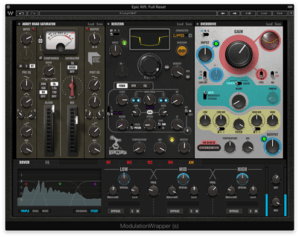
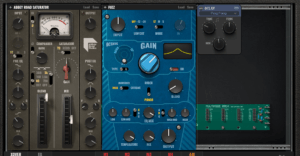
Inside the MultiMod Rack you can choose from Abbey Road Saturator, Berserk Distortion, or the Fuzz, Overdrive and Screamer from their MDMX plugins. Also included are 2 effects modules; a chorus and a delay. After you select what plugin units you would like in the rack section, you can then rearrange them however you see fit. It’s as easy as holding down the mouse on the rack module and dragging it to a new position. This of course will give you entirely different sounds depending on the arrangement. Once you have the lineup you want, you can go even further into detail with the multiband controls at the bottom.
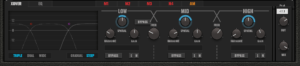
This section has crossover frequencies you can choose from. So you can then assign, for instance, the Fuzz to the midrange, the Abbey Road Saturator to the top end, and then overdrive to the low end. This gives you insane control on which part of the frequency spectrum each element is interacting with! Alongside the multiband is an EQ. So you don’t even have to use a separate one unless you wish to do so. You can do it all here in one window!
So, let’s move on to another great feature. Clicking next to the multiband and EQ is letters “M1, M2, M3, M4, AM”. These are modulators. When you click on one of these it will then reveal the modulation controls. This is when things get really cool! What you can do is easily assign each modulator to whatever dial or control you desire and then hand draw in either LFO or sequence to give the plugin its own movement. Let’s say you’d like to assign a moving frequency to move around on the Berserk modular, then you can assign M1 to the Mod Freq dial. You can then adjust to taste on how much is sent and it will begin to react in whatever way you draw it in or sequence it with the modulation.
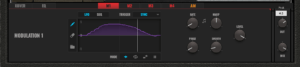
This is great for tweaking and adding something special during a production. Alongside these great modulator controls is also the AM control. This allows you to assign amplitude rather than modulation to where you need. With the attack and release dials you can then see how quick or slow the curves become with something such as the mod frequency on the berserk. It starts to do super strange (but creative) things this way.
Overall, I give the MultiMod Rack two big noisy thumbs up. Waves have once again taken their already established plugins into a new direction and giving you something fun to mess with. Perfect for sound designers and producers alike, this plugin will give you all you need in the world of distortion and then some! So what are you waiting for? Check it out for yourself today! Just follow this link here to pick it up!
GRAMMY WINNING PRODUCER DJ SWIVEL RELEASES NEW VOCAL MIXING PLUGIN THE SAUCE
Grammy winning producer DJ Swivel – best known for his work with artists such as The Chainsmokers, Jay-Z, Beyonce, Cold Play, Kanye West) has released his own vocal mixing plugin The Sauce. The Sauce is designed to help producers get a professional, mix ready vocal sound with one plugin. Vocals can be one of the most tricky to get sit right in a mix, and with The Sauce that process is simplified in an easy streamlined interface.
To purchase the sauce CLICK HERE.
Working with these incredible people taught me so much about what it takes to make a great record – The process.
The sauce is what I call a vocal seasoner. It’s got all of the ingredients you’ll ever need to give your vocals that unique flavor we all want.– DJ Swivel
HIGHLIGHTS/ FEATURES
 FLAVOR
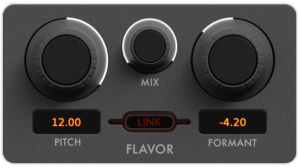 FLAVOR
Sculpt & shift the pitch and formant modulation of both mono and polyphonic audio in real time. These effects are commonly used to manipulate vocals, giving that “vocal chop” sound heard in countless Pop, Dance, and Hip-Hop hits. But if you’re feeling adventurous try it on drums, you won’t be disappointed!
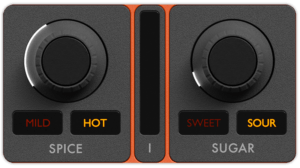
SUGAR & SPICE
 SUGAR & SPICE
Every sauce needs a little sugar and spice. Add your choice of harmonic saturation or overdrive distortion on the Spice knob, and chorus or flanger effects on the sugar knob.
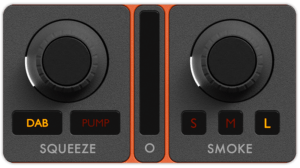
SQUEEZE
 SQUEEZE
Use these two parallel compressor options to tame or aggressively squeeze your input signal. These two compressor options can also be fed by a sidechain input.
SMOKE
Add a little air with 3 different convolution reverb options, all modeled after some of DJ Swivel’s favorites from both past and present. A small room, a medium plate, or a large hall. This knob is treated as a mix knob allowing a 100% wet signal, enabling The Sauce to be used as an FX return.
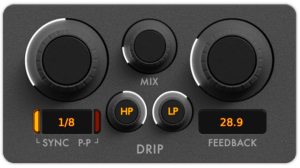
DRIP
 DRIP
DRIPDrip is a classic modern delay and echo modulation, with built in high and low pass filters, along with a ping pong option. Simple, yet effective.
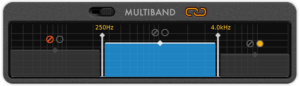
MULTIBAND
 MULTIBAND
The Sauce allows for all of the above effects to be processed both as a whole, or individually across three user definable multiband layers. This allows for endless possibilities of sounds and effects never heard before, and not currently available in a standalone plugin like this.
- Make your sounds wide with Spread, a natural sounding stereo imager
- Hi and Low pass output filters with resonance switches for a more musical filter sound
- Output / Mix toggle allowing the main output knob to be used as both a volume gain stage, and an FX mix
- Save, store, and recall your own recipes (presets)
- A / B two different recipe options
- GUI optimized for retina displays
- Easy plugin authorization
- Adjust the size of the plugin to fit your monitor
SPECS
PLUGIN-FORMATS
- AAX, AU, VST3* (64 bit)
*Please note The Sauce does not support VST2 or earlier formats.
SUPPORTED SAMPLE RATES:
- Minimum 44.1 KHz, Maximum 192 KHz
SYSTEM REQUIREMENTS:
- Mac OS X 10.11 or later, Windows 7 or later
- An internet connection is required at the time of activation
SUPPORTED HOSTS:
- Pro Tools, Logic, Ableton, Cubase, FL Studio, Reason, Reaper, Studio One, Nuendo
SPECS
PLUGIN-FORMATS
- AAX, AU, VST3* (64 bit)
*Please note The Sauce does not support VST2 or earlier formats.
SUPPORTED SAMPLE RATES:
- Minimum 44.1 KHz, Maximum 192 KHz
SYSTEM REQUIREMENTS:
- Mac OS X 10.11 or later, Windows 7 or later
- An internet connection is required at the time of activation
SUPPORTED HOSTS:
- Pro Tools, Logic, Ableton, Cubase, FL Studio, Reason, Reaper, Studio One, Nuendo
To purchase the sauce CLICK HERE.
SEQUENTIAL ANNOUNCES THE PRO 3 SYNTHESIZER AT NAMM 2020
A Three-Generation Legacy
The Sequential Pro 1 and Pro 2 mono synths achieved nearly legendary status in their time. So it was only natural that we build on their strengths with an even more worthy successor. Enter the Pro 3, Sequential’s 2-VCO + wavetable mono/paraphonic synth — a new benchmark for raw sonic power and unrivalled versatility.
The Power of 3
The Pro 3 boasts three oscillators, three vintage filters, three LFOs, four loopable envelopes, a massive 32-slot mod matrix, and a 16 x 16 x 4 sequencer. Throw in dual digital effects and four control voltage ins and outs, and you’ve got a hugely powerful instrument that’s as exciting to program as it is to play.
A Next-Generation Classic
The Pro 3 is a hybrid of solid, old-school analog synthesis paired with versatile digital technology. Its two voltage controlled oscillators provide warmth and presence while its third wavetable oscillator provides digital edge and grit. With 32 tables of 16 waves each and wave morphing, tonal possibilities are immense. Tuned feedback with grunge, and analog distortion deliver industrial-grade nastiness on demand.
Three Filters Based on Vintage Designs
At the heart of the Pro 3’s ballsy sound are its vintage-style filters. Filter 1 is a 4-pole low-pass design based on the Prophet-6 filter. Filter 2 is a classic transistor ladder filter with optional resonance compensation to preserve its low-end punch. Filter 3 is a classic 2-pole, state-variable design based on the OB-6 filter that can be continuously varied between low-pass, notch, and high-pass operation, with an optional band-pass mode. An additional Drive control provides still more punch when you really want to get down and dirty.
Expressive Sequencing
Possibly the Pro 3’s most powerful performance tool is its sequencer. With 16 tracks, 16 steps, and 4 phrases, it features both real-time and step input, ratcheting, variable gate and sequence lengths, multiple playback modes, and paraphonic operation. It also syncs to MIDI clock and external audio input, and inputs/outputs control voltages. In addition to notes, sequence tracks can control any parameter in the 171-destination modulation matrix.
Plays Well with Modulars
The Pro 3’s flexible architecture opens the door to not only processing external audio, but also to interfacing with modular synths through its 4 rear-panel control voltage inputs/outputs and a dedicated gate output. Control voltages can be assigned and routed from within the modulation matrix and can run at audio rates for extreme modulation effects. Some of the many parameters that can be sent to the CV outputs include oscillators, LFOs, envelopes, and sequencer tracks, allowing the Pro 3 to become the central hub of a modular or multi-synth setup.
Effects, Envelopes, LFOs, an Arpeggiator, and Extreme Modulation
The Pro 3’s Effects section provides delays, reverbs, time-domain effects such as chorus/phasing/flanging and more. There are four loopable five-stage envelope generators, three syncable LFOs with slew and phase offset, a full-featured arpeggiator, and a 32-slot modulation matrix with dozens of modulation sources and over a hundred destinations.
Monophonic and Paraphonic Operation
The Pro 3 was designed to be a super-powerful monosynth, but it is also a versatile 3-voice paraphonic synth. This makes playing 3-note chords not only possible, but with creative use of effects and some per-oscillator modulation, very expressive.
Put all of this sonic power in a three-octave, semi-weighted keyboard with velocity and channel aftertouch, add backlit pitch and mod wheels and a location-sensitive touch slider, and you’ve got one of the most inspiring synths ever made.
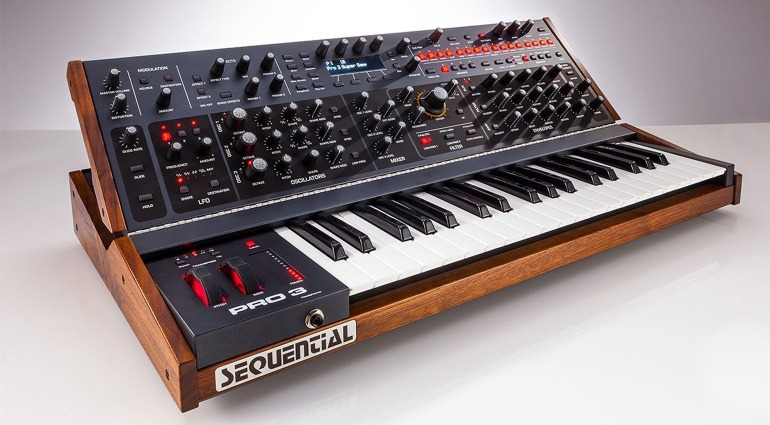
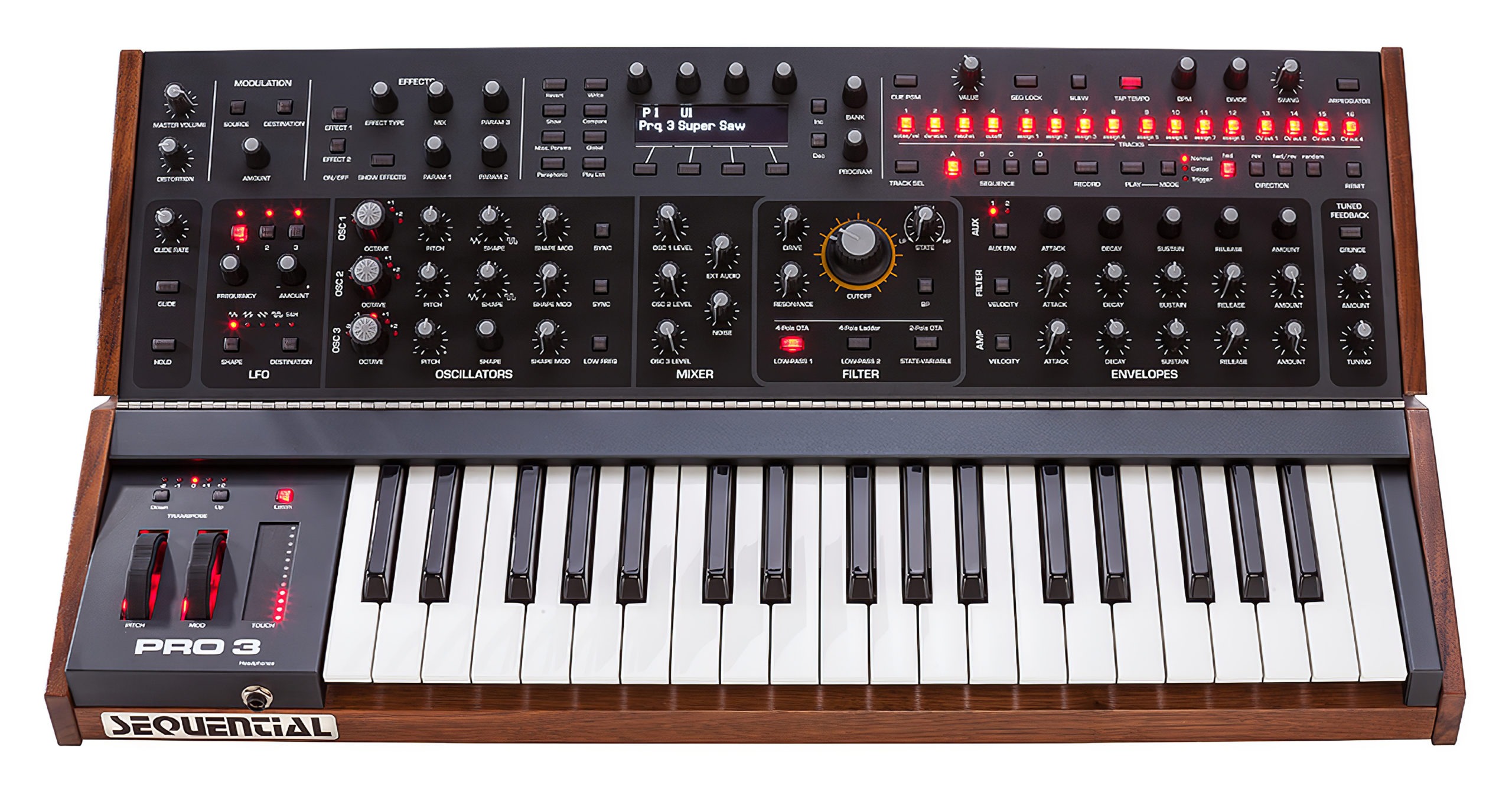
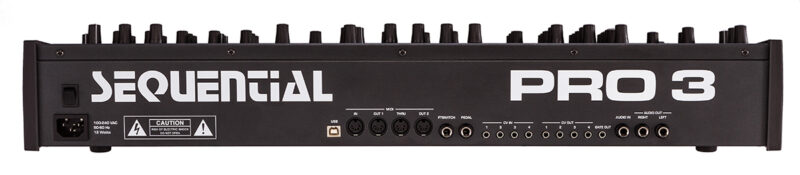
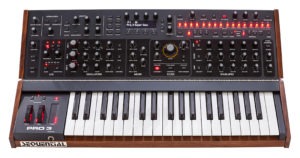
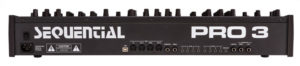
PRO 3 SPECIFICATIONS
3 OSCILLATORS
- Two analog, voltage-controlled oscillators
- One DSP-based digital oscillator
- Analog oscillators produce three classic wave shapes: (triangle, saw, pulse) with variable shape modulation/pulse width on each
- Digital oscillator produce 32 digital wavetables of 16 waves each with wave morphing, plus classic wave shapes (sine, triangle, saw, variable-width pulse) and super saw
- Digital oscillator 3 can function as an LFO for complex wavetable-based modulation
- White noise generator
- Hard sync, per-oscillator Glide, Oscillator Slop
3-VOICE PARAPHONIC PLAYABILITY
- 3-voice paraphonic mode with individually-gated envelopes per oscillator
3 FILTERS
- Three classic filter types
- Filter 1 is a 4-pole, 24 dB per-octave, Prophet-6™ low-pass filter
- Filter 2 is a classic, 4-pole, 24 dB per-octave, transistor ladder filter with optional resonance compensation
- Filter 3 is a 2-pole, 12 db per-octave, OB-6™ state-variable filter. It can be continuously varied between low-pass, notch, and high-pass operation, with an optional band-pass mode.
3 LFOS
- Three syncable LFOs with phase offset and slew per LFO
- Five waveshapes: triangle, saw, reverse saw, square, and S&H
4 ENVELOPES
- Four ADSR envelopes with delay (Filter, VCA, and two Auxiliary envelopes)
- Envelopes freely assignable to multiple modulation destinations
- All envelopes can repeat/loop
DIGITAL EFFECTS
- Dual digital effects
- Stereo delay, BBD delay, chorus, flanger, phaser, ring mod, vintage rotating speaker, distortion, high-pass filter, super plate reverb
FEEDBACK AND DISTORTION
- Tuned feedback with Grunge for extra-aggressive tonal destruction
- Programmable analog distortion
32-SLOT MODULATION MATRIX
- 32 slot modulation matrix with over 46 mod sources and over 171 mod destinations
- Modulation assignment buttons enable quick and easy modulation routing
- Mod Matrix runs at audio rates
4 CONTROL VOLTAGE INS & OUTS AND GATE OUT
- Four control voltage (CV) inputs and outputs for interfacing with modular synths and other CV-compatible devices
- Parameters that can be sent to CV outputs include oscillators, LFOs, envelopes, sequencer tracks and any other source within the modulation matrix. Runs at audio rates.
- Gate Out for triggering external CV-compatible devices. Any CV in can be used as a gate input.
16-TRACK SEQUENCER
- Advanced sequencer with three modes: normal, gated, and trigger
- 16 tracks and 4 linkable 16-step phrases
- Per-step ratcheting, duration, and velocity
- Multiple playback modes: forward, reverse, forward/reverse, random
- Supports real-time/step input, rests, and variable-length sequences
- Syncs to MIDI clock and external audio and CV input
- Sequences freely assignable to any modulation destination
ARPEGGIATOR
- Sophisticated arpeggiator with up, down, up+down, random, assign modes
- Syncs to MIDI clock and external audio and CV inputs
- Re-latching arpeggiation
- Runs concurrent with Sequencer for arpeggiated patterns with parameter automation
CONTROLS
- Over 60 knobs and 70 buttons enable deep, comprehensive editing with minimal menu diving
- Backlit pitch and mod wheels are easily visible in low-light situations and have a smooth, precise response.
- Independently adjustable upper and lower pitch wheel range
- Position-sensitive latchable touch slider for enhanced interactivity and control
- Full-sized, three-octave, semi-weighted keyboard with velocity and aftertouch
MEMORY
- 512 user and 512 factory programs
- Playlist mode for generating easily accessible set lists of your favorite programs
IN/OUT
- 1 MIDI In, 1 MIDI Out, and 1 MIDI Thru/Out 2 port
- USB port for bidirectional MIDI communication
- 4 CV inputs (4 x 1/8″ jack) with -10v to +10v voltage range
- 4 CV outputs (4 x 1/8″ jack) with -10v to +10v voltage range
- 1 Gate Out (1/8″ jack)
- 1 Sustain/footswitch input
- 1 Expression pedal input
- 1 External audio input (1/4″ phone jack)
- Main stereo output (2 x 1/4″ phone jack)
- Headphone out (stereo 1/4″ phone jack)
POWER
- 1 universal IEC AC power inlet for internal power supply
- Operates worldwide on voltages between 100-240v, 50-60Hz, 30 watts maximum power consumption
PHYSICAL SPECS
- Premium, 3-octave, semi-weighted Fatar keyboard
- 26.5″ L x 13″ W x 3.5″ H (67.3 cm x 33 cm x 8.9 cm)
- Weight: 16 lbs (7.25 kg)
WAVES RELEASE NEW DISTORTION PLUGIN – BERSERK
Waves has released a brand new distortion and saturation plugin that will turn heads! It’s called Berserk and the name explains it all. This beast can do pretty much anything and everything distortion enthusiasts desire, extremely well.
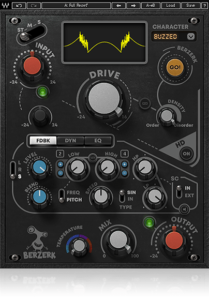
Waves are one of the most influential and household names in the entire plugin world. Recently they have been shifting focus into areas not yet explored (such as their Abbey Road Studios 3 where you can literally sit inside Studio 3 of Abbey Road and hear the ‘room’ as if you are mixing there in headphones), as well other types of better known plugins; such as the new distortion plug. The Berserk plugin that we will talk about today is not reinventing the wheel. Instead, it’s more like taking the wheel and throwing dirt all over it and stabbing it with a pencil to make it pop and explode in the most beautiful way possible. This is what distortion is about anyhow, destroying a signal in the most tasteful way you can! Waves has achieved this gorgeously.
So let’s dive in and check it out!
Distortion… a touch… or a LOT.
This plugin is a creative, versatile, dynamic distortion that lets you build wild distortion effects with a lot of room for experimentation. It combines distortion, dynamic control, even feedback, with 10 originally developed distortion waveform shapes to choose from. This means it gives you the utmost control from just about every aspect of what distortion can do to your audio signal. The distortion shapes can be chosen from the Character menu. They have very obvious different sounds and can be fully mutated to fit the content as you feel it’s needed. I found great use of this both on Guitars (metal!), Synths (Dubstep!), and even vocals (Rock!), but they can also be used to just add a touch of vibe as you push or pull the wet and dry mix knob. With character names like “Freaky ”, “Clipped”, “Fuzzed” and “Frenzy”, you can tell what you are about to get into right away. You can even hit their “GO BERSERK” button and it will randomize the distortion shape in surprising ways to give you a gamble on what will happen next!
Additionally, there is a Mid/Side and Stereo selection to assign the distortion to any of these signals. This is great for adding onto groups and only sizzling the top and sides as needed. Try this on gritty mid range dubstep bass. Want to add fuel to the fire and punch to the distortion? Then you will find the dynamics section dynamite. There is both upwards and downwards modes, and you can then blend the signal to taste. Things get interesting really fast!
Let’s Get Freaky!
One of freakiest parts of this plugin is the feedback section. You can take the signal and make it completely chaotic, pitching around as much as you want. This is no ordinary feedback knob, expect the unexpected! It’s more like a chaotic pitching demonic signal generator that adds something super crazy to your distortion. Use with care here, you’ve been warned!
Along with the feedback and dynamics is standard EQ, which does exactly as it says. It allows you to EQ the signal split into 3 bands. Low, Mid and High. You can choose the bandwidth, gain and frequency to keep it very simple and straight forward. There is a big DRIVE knob in the middle and this is your best friend if you want to test out the amount you want to actually put into the signal.
Light saturation?
Heavy distortion?
This is where you can decide best. This alongside the Dry/Wet as mentioned can help give you the results you desire.
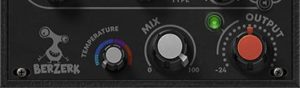
Berserk also comes with a great feature that is called “Temperature”. This can make your distortion signal more ‘warm’ or more ‘cold.’ I love it. After you get the sound just right you can then throw this in for a taste of livening up or dimming down as you see fit. Great for added control of the overall ‘feel’ of the distortion you want to bring in. Getting trashed audio to sound good in the mix is all about control, the Temperature knob is an amazing assistant for this.
And last but definitely not least… it has a great GUI. There’s not too much ‘fluff’ and each knob and section gets straight to the point. This makes it easy (and fun) to use. I am never a fan of plugins with more focus on the GUI than the actual sound and “Berserk” combines both; a simple and straight forward user experience that looks good.
So my overall thoughts about this plugin is you can’t go wrong with it! Well, you can, and you can go WAY wrong, but in the best way possible. There were times I gave it a bit too much and was literally scratching my head going “Wow, that sounds so wrong to what this sound was before, but ma, is it awesome!”. You can make great use of this anywhere you want heavy distortion. So I say hop on the Waves shop and check it out for yourselves! Dial in and go BERSERK!
Oh, and did I mention this one they will also be releasing for FREE?!
Yes! No Joke!
So hurry over if you want to grab it from Waves Audio directly for Black Friday 2019!
10 Amazing VST Synthesizers
IMAGE-LINE HARMOR
Image-line Harmor is a very unique synthesizer capable of incredible sound design possibilities. At the heart of the synth is an additive resynthesis engine, meaning you can load your own samples into Harmor and they will be resynthesized and converted into ‘partials’ which will give you much more control over the original sound. If you are a sound designer looking for deep control over sounds that have never been heard before, then check out Image-Line Harmor.
NATIVE INSTRUMENTS MASSIVE
A tried and true classic, NI Massive has become a staple in many producers homes. Commonly known as being the ‘go-to’ synth for Dubstep sounds, NI Massive is capable of so much more.
XFER SERUM
Probably one of the hottest synthesizers on the market today, Serum has been a game changer every since Steve Duda dropped it on us. With it’s extensive wavetable editing capabilities and incredible on board fx, this has become a workhorse synth for many producers today. Serum also features one of the biggest available commercial library expansions of any synth, so if you are looking for presets Serum may be for you.
PARAWAVE RAPID
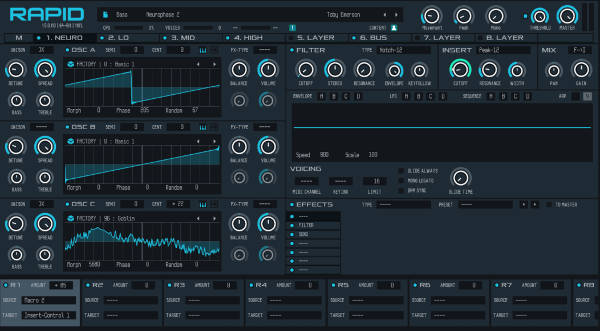
Parawave is a new company which has brought an incredible new synth to us by the name of Rapid. Rapid supports multisamples, wavetable synthesizer, 8 layers, and a huge amount of sound manipulation and modulation possibilities. The included sound library is excellent and you may find yourself getting polished and professional sounds out of this synth faster than you would with some other offerings.
SYNAPSE AUDIO DUNE 2
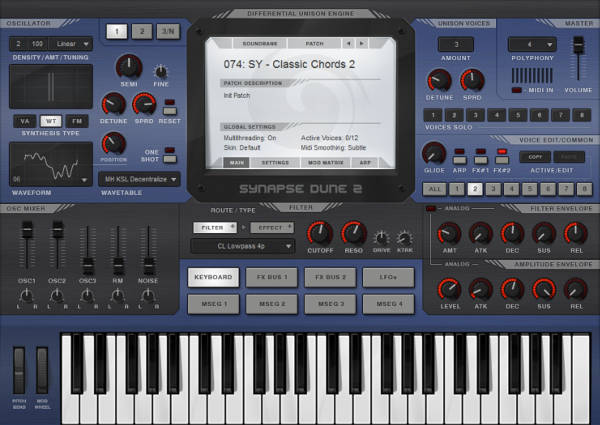
Another very unique synth is Dune 2 (Differential unison engine). Dune features a very interesting approach to unison synthesis. Each unison voice can have different parameter mappings. For example you can spread the cutoff of each unison voice around to create an incredibly complex and fat sound.
OMNISPHERE 2
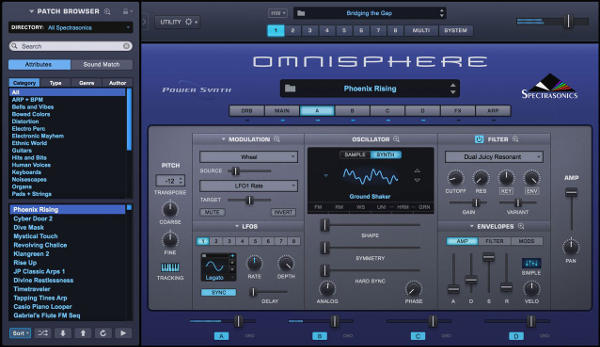
Omnisphere is a hybrid sample based, and subractive VA synthesizer created by legendary synth creator Eric Persing of Spectrasonics. With an incredibly enormous sound library and ability to add 4 layers of sound, Spectrasonics Omnisphere 2 has a world of sound waiting to be discovered.
REVEAL SOUND SPIRE
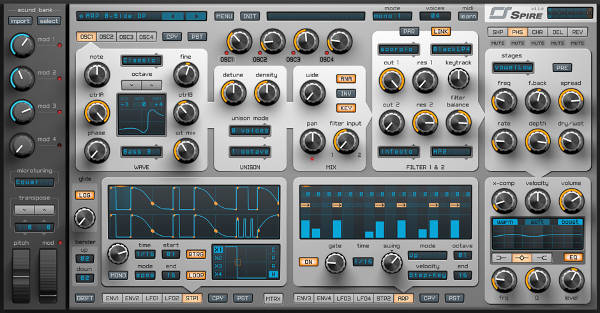
Reveal Sound Spire has often been compared to the Access Virus model synthesizer. With a hybrid of wavetable, analog modelling, and FM synthesis, Spire offers a wide range of sound from razor sharp plucks to huge lush pads.
PROPELLERHEAD EUROPA
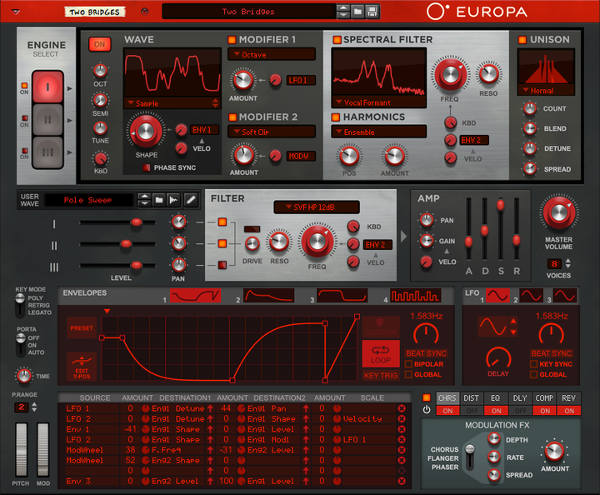
For many years the devices from Reason have been locked away and inaccessible to producers unless you were running a copy of Reason. Now Propellerhead have ported on of their most popular devices to VST. Europa is a very smooth sounding synth with features both VA synthesizer and wavetable synthesizer. You can load your own samples and convert them to wavetable, or even as a “Spectral Filter” which can yield very interesting results.
U-HE DIVA
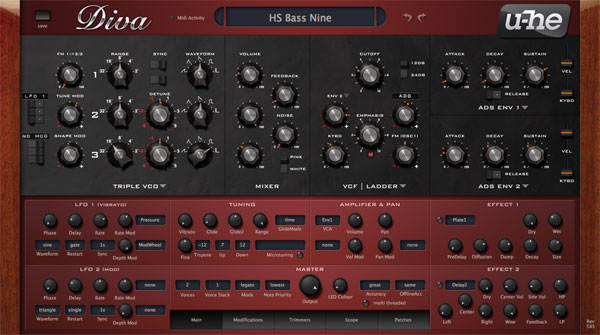
U-he is a company that is constantly pushing the boundaries of virtual instrument synthesizer, and when DIVA landed on the scene it become a new benchmark for analog modelled synthesis. While heavy on the CPU, the idea behind DIVA is that it was a no comprosise synthesizer focusing mainly on sound quality. You can expect deep and organic basses and rich analog style sounds out of DIVA. It’s semi-modular architecture will allow you to mix Moog modelled oscillators with filters of old vintage analog Roland or Oberheim synthesizers.
10 DAWs For Electronic Music Creation
The DAW is the backbone of where most of the music creation happens. We have laid out some of the most popular DAW’s used by producers today. Choosing the right DAW for you is a very difficult and in depth journey. The best way to really get a feel for what resonates with you is to try out the demos of each one. Try to make a few simple loops with each one and pay close attention to which work flow functions you seem to enjoy more. Do not let other users confuse you and tell you their DAW sounds better or is the better program. There is no best DAW, only the one that works best for you.
IMAGE-LINE FL STUDIO
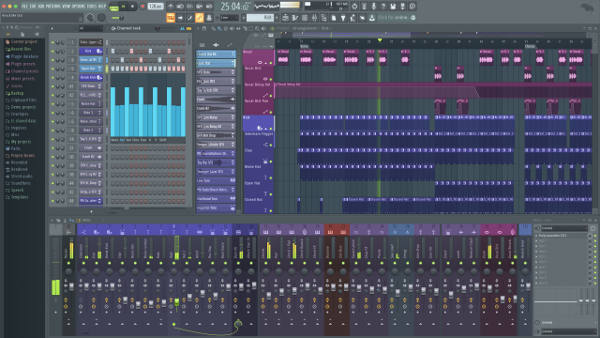
Image-line FL Studio has been around for over 20 years and features a very unique pattern based approach to music production. Featuring one of the fastest piano rolls around, excellent included devices, and lifetime free updates it’s no wonder why this is one of the most popular music production suites around.
ABLETON LIVE
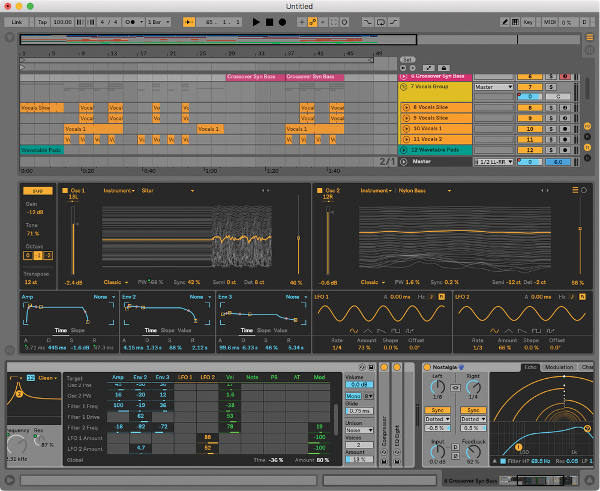
Originally focuses as a live performance tool, Ableton live has evolved into so much more over the years.
BITWIG STUDIO
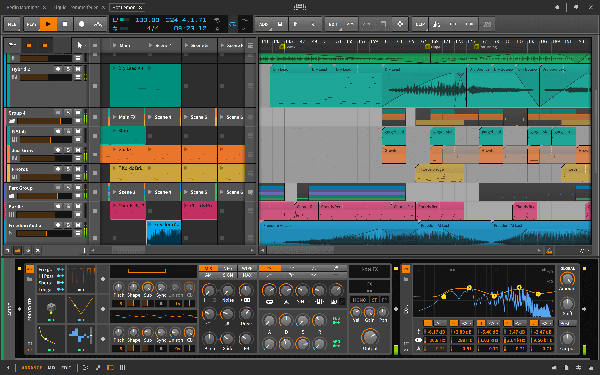
The new guy on the block, Bitwig Studio has a very modern approach to music production creation. Borrowing some of the best ideas from Ableton Live, and making them into something completely unique, Bitwig definitely has it’s own soul and a bright future. There is a very modular approach to the devices, and you can add unlimited modulators to your devices. For uses who like to build their own devices, and tweak things with incredble level of control, Bitwig might be the DAW for you.
STUDIO ONE

Another relatively newcomer to the scene. Studio One is quickly growing into a incredibly polished and solid DAW. Feautring some ground breaking features like integrated Melodyne, Excellent audio quantizing, and easy drag and drop interface Studio One has rapidly been gaining a huge userbase of professional studio engineers and producers.
CUBASE
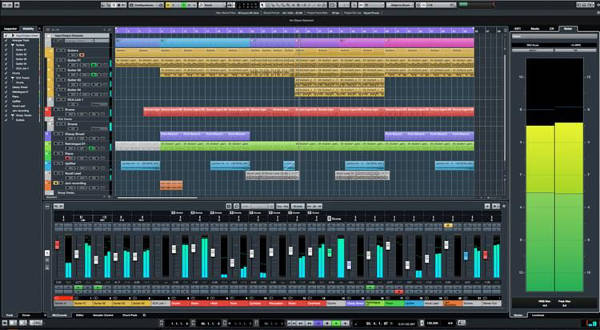
One of the oldest on the scene, Cubase has the advantage of time and experience here. Adding new features years over years, this certainly is one of the most fully featured DAW’s around.
LOGIC
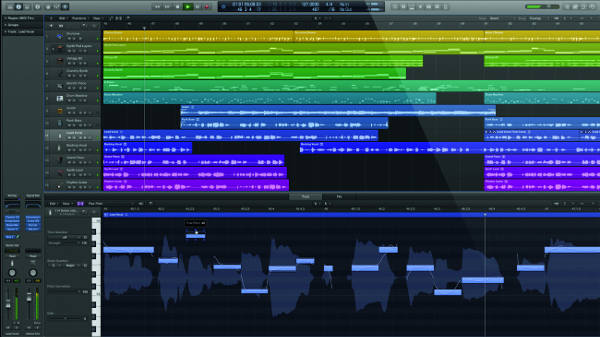
Logic is a MAC only application which has been around for a long time. With it’s excellent suite of included effects and instruments (including the exception Alchemy instrument), Logic is a favorite among many studio engineers and producers.
REASON
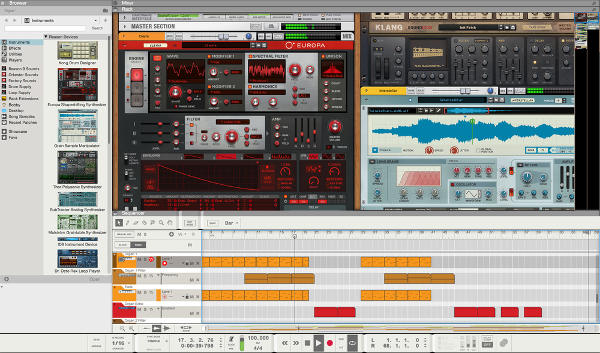
Probably one of the more unique offerings in the DAW realm, reason started as a virtual rack of analog instruments and effects complete with patching of cables. Over the years it has blossomed into a fully featured DAW including many pro features such as pitch correction, guitar fx, time stretching and the much requested VST support.
10 Effects To Dirty Up Your Digital Music
Most music these days is created in the box, with computer only software and plugins. While there are certain advantages to this such as precise sound and predictable results, many believed todays music to have a much more sterile and cold sound than music produced only on analog gear. Gone is the saturation, artifacts and hiss from tape machines, analog compressors, and analog mixing boards. Luckily there is an entire genre of plugins dedicated to bringing some of this analog magic back into your recordings. Here are 10 tools that can help you achieve that result.
SONITEX STX-1260
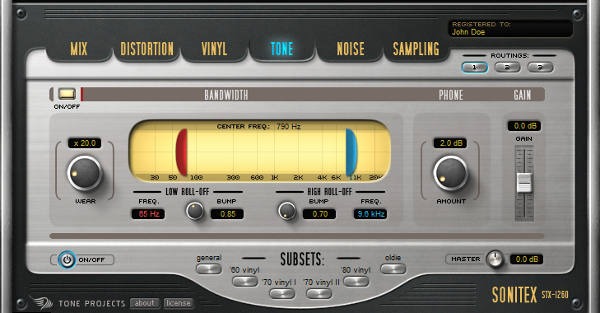
The Sonitex STX-1260 is a jack of all trades plugin for adding grit and dirt into your sounds. Complete with vinyl simulation, distortion, noise, sample rate reduction, and filtering – this thing has it all!
WAVES ABBEY ROAD VINYL
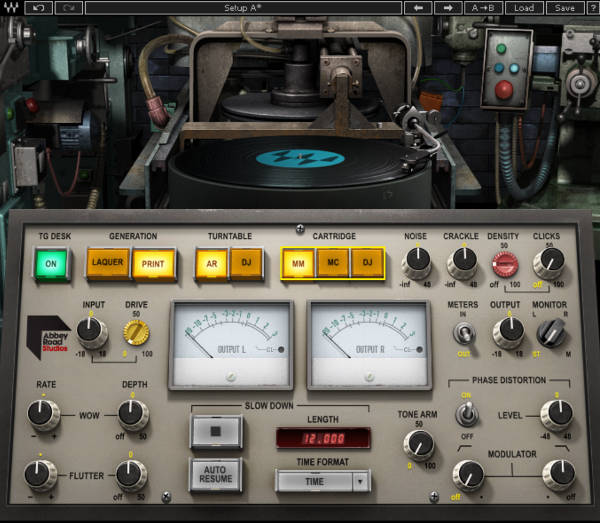
The waves abbey road vinyl was one of the first truly modeled vinyl plugins. Vinyl has always had a special sound that many enjoy, smooth warmth and a hint of hiss and crackle which made sampling old records so popular. Now you can forget sampling old records and create your own samples that sound like they were pulled straight from an old record.
SOUNDTOYS RADIATOR
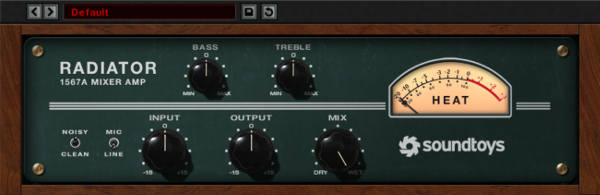
Soundtoys Radiator is a true gem which can add serious attitutde to drum tracks, or some extra beef to synths. The color added here is a nice smooth organic saturation which sounds like an analog device.
IZOTOPE VINYL
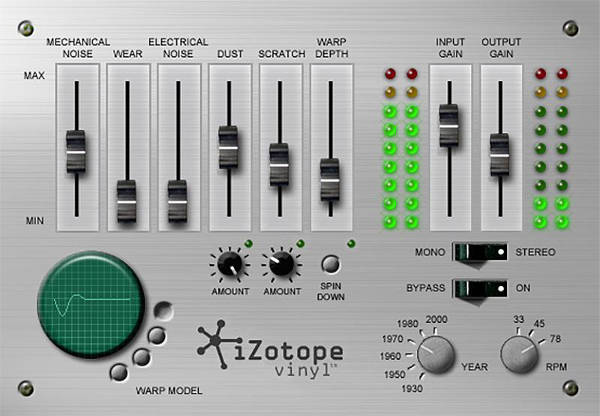
One of the oldest and more imporantly free plugins on the scene. Izotope vinyl has become a true staple for many to add that lofi sound into tracks.
VENGEANCE VINYLIZER
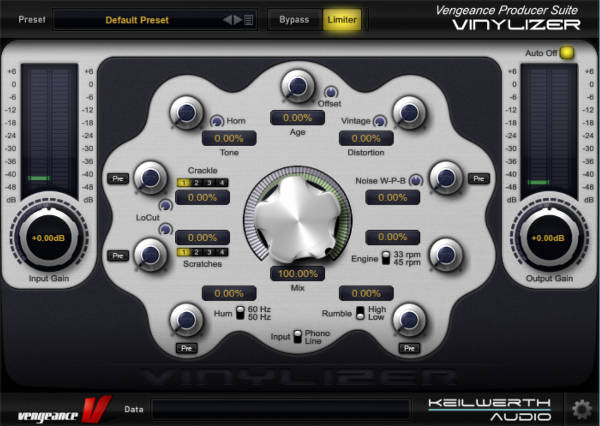
Vengeance has put out their own vinyl simulation plugin. There is a lot of control to this plugin, including the type of crackle and noise, age, and distortion.
AUDIOTHING VINYL STRIP
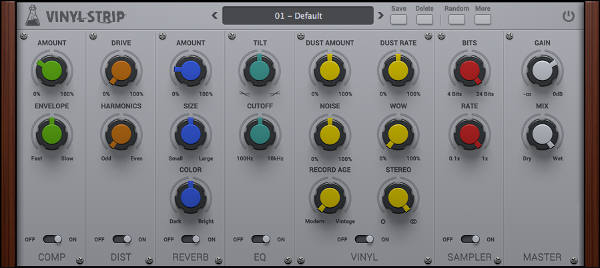
A combination of Distortion, Compressor, Bit Crusher, Tilt EQ, Vintage Reverb, and Vinylizer will give you a good amount of tools to dirty up your sounds.
IZOTOPE TRASH
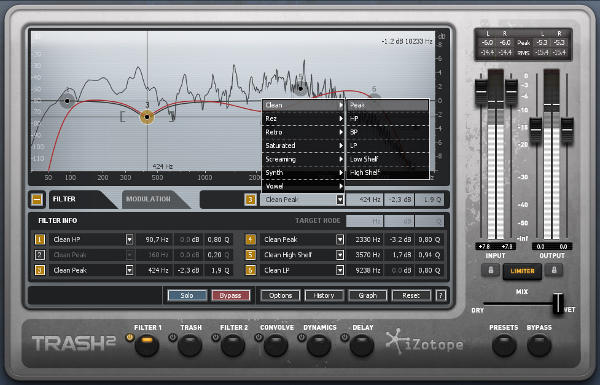
Trash is a very in depth distortion and saturation plugin, complete with amp convolutions and deep control over the saturation. Izotope Trash 2 is a secret weapon for many pro producers.
FABFILTER SATURN
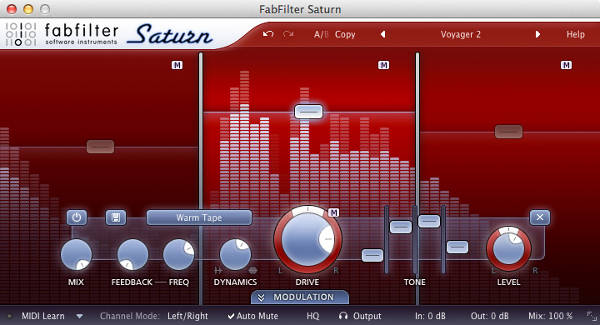
Fabfilter is a company that excels at making plugins fun and easy to use, and this is incredibly apparent in Saturn. You can easily add multi-band saturation or distortion to your sounds with this plugin, and everything is a breeze to use. Feauturing multiple distortion types, and unique modulation, Saturn is a tool that brings the fun back into working on music.
SOUNDTOYS DECAPITATOR
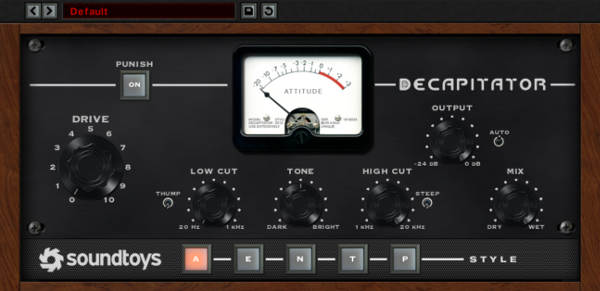
Another legend in the scene, soundtoys decapitator is one of the best plugins for adding analog style distortion.
U-HE SATIN
A unique spin on the tape modelling plugins, u-he satin adds a special fuzz and high end grit that has its own soul.